Granite vs Quartz vs Corian Countertops
Choosing between granite, quartz, and corian countertops is one of the most confusing decisions in a Hyderabad kitchen renovation — right after picking your cabinet material. Every showroom pushes whatever they stock the most of, and the price ranges you’ll hear vary wildly depending on who’s quoting you. This guide breaks down the real cost, durability, and maintenance differences between granite, quartz, and corian for Hyderabad’s climate and cooking style, so you can make the call with actual numbers instead of a salesperson’s opinion.
Planning your full kitchen — cabinets and countertop together? Get a free personalised quote.
What Are Granite, Quartz, and Corian Countertops?
Granite is a natural stone cut from quarried slabs — every piece is unique, with its own veining and mineral pattern. It’s been the default countertop choice in Indian kitchens for decades, and most fabricators in Hyderabad can source it easily from Rajasthan, Andhra Pradesh, or Karnataka quarries. Because it’s a raw natural material, no two granite slabs look exactly alike, which some homeowners love and others find hard to plan a colour scheme around.
Quartz is an engineered stone — roughly 90-95% crushed natural quartz bound with resin and pigment. Because it’s manufactured under controlled conditions, the colour and pattern are far more consistent slab to slab than granite, and there’s no need for periodic sealing. It’s become the go-to choice for homeowners who want a modern, uniform look without the maintenance routine that comes with natural stone.
Corian is a solid surface material made from acrylic polymer and natural minerals, originally developed for commercial and healthcare applications where hygiene and seamlessness matter. It’s fully non-porous, can be thermoformed into curves and integrated sinks, and — unlike granite or quartz — has no visible seams even across long countertop runs. This makes it popular for premium, design-forward kitchens where a completely smooth surface is the goal.
In the granite vs quartz vs corian decision, each material solves a different problem: granite for proven durability and value, quartz for low-maintenance consistency, and corian for seamless design flexibility. We don’t manufacture countertops ourselves at Metal & More — we build the SS304 steel and aluminium cabinets underneath them. But after fitting hundreds of kitchens across Hyderabad, we’ve seen firsthand which countertop choices hold up and which ones create problems three years down the line.
Granite vs Quartz vs Corian: 2026 Cost Comparison in Hyderabad
Prices vary by slab quality, thickness, and supplier, but here’s a realistic 2026 range for Hyderabad based on standard 20mm-thick material, fitted:
| Material | Price Range (per sq ft) | Typical Kitchen Cost (45–55 sq ft) |
|---|---|---|
| Granite (standard Indian stone) | ₹150 – ₹450 | ₹7,000 – ₹25,000 |
| Granite (premium/imported) | ₹450 – ₹900 | ₹20,000 – ₹50,000 |
| Quartz (engineered stone) | ₹250 – ₹650 | ₹11,000 – ₹36,000 |
| Corian (solid surface) | ₹350 – ₹900 | ₹16,000 – ₹50,000 |
Granite remains the most budget-friendly option for most Hyderabad kitchens. Quartz sits in the middle. Corian tends to cost the most once you factor in seamless installation and curved edges, but it’s also the easiest to repair without replacing the whole slab.
Durability, Heat & Stain Resistance for Indian Cooking
Indian cooking is harder on a countertop than most international kitchen guides account for. Tadka splatters hot oil in seconds, turmeric and chilli powder stain instantly if left standing, and pressure cookers release direct steam onto the surface multiple times a day. Here’s how each material actually performs under those conditions:
| Property | Granite | Quartz | Corian |
|---|---|---|---|
| Heat resistance | Excellent — direct hot vessels are usually fine | Good, but prolonged direct heat can discolour the resin | Weakest — can scorch from a hot pan placed directly on it |
| Stain resistance | Moderate — needs sealing to resist turmeric/oil stains | Excellent — non-porous, resists staining well | Excellent — non-porous, wipes clean easily |
| Scratch resistance | Very high | Very high | Moderate — can be scratched, but also sanded and refinished |
| Maintenance | Needs sealing every 1–2 years | Low — no sealing required | Low — no sealing required |
| Repairability | Difficult — chips/cracks are hard to fix invisibly | Difficult — same issue as granite | Easy — scratches and burns can be sanded out |
| Expected lifespan | 20+ years | 15–20 years | 10–15 years (longer with resurfacing) |
If your kitchen sees heavy daily cooking with a lot of direct-heat contact, granite’s heat tolerance gives it a real edge. If low maintenance and stain resistance matter most, quartz is the safer bet. Corian wins on design flexibility and repairability, but needs a trivet under hot pans.
Not sure which countertop suits your cooking style and kitchen size? Ask us — we’ll give you an honest recommendation, not a sales pitch.
Colours and Finishes: What Works Best in a Hyderabad Kitchen
Beyond the granite vs quartz vs corian material choice, colour and finish affect how well a countertop hides everyday kitchen mess — which matters a lot more in daily use than most people expect before moving in.
- Dark granite (black galaxy, steel grey): Hides oil marks and water spots well, but shows dust and flour residue more visibly in bright kitchen lighting.
- Light granite or quartz (white, beige, cream): Makes a small kitchen feel brighter and larger, but stains and turmeric marks show up faster if not wiped promptly.
- Speckled or textured quartz: The most forgiving option for daily use — patterns naturally camouflage crumbs, water spots, and light stains between cleanings.
- Matte corian finishes: Look premium and modern but show fingerprints and light scratches more than a polished granite or quartz surface.
If you’re cooking daily with turmeric, chilli powder, and mustard oil — as most Hyderabad kitchens do — a mid-tone speckled or patterned finish in any of the three materials will save you a lot of daily wiping compared to a solid light or solid dark colour.
Common Mistakes Homeowners Make When Choosing a Countertop
- Picking colour before checking porosity. Some light-coloured granites are more porous and stain faster — always ask for the sealing requirement, not just the shade card.
- Skipping the sealing schedule. Unsealed granite absorbs oil and turmeric within the first year, leaving permanent dark patches near the stove.
- Assuming quartz is heatproof. It resists stains well, but placing a hot kadai directly on quartz for extended periods can cause visible discolouration.
- Choosing corian without a trivet habit. It’s the easiest material to damage from direct heat — factor that into your daily kitchen habits before choosing it.
- Ignoring what’s underneath. A heavy stone slab sitting on a weak or moisture-damaged cabinet base is a bigger long-term risk than the countertop material itself.
- Not budgeting for the sink cutout and edge profile. Undermount sinks, bullnose edges, and waterfall corners can add 15-25% to your quoted countertop price — always ask for an all-inclusive number before signing off.
- Comparing quotes on price alone. A cheaper granite vs quartz vs corian quote may use thinner slabs (12-15mm instead of 20mm), which affects both durability and how the edge profile looks once fitted.
Why Your Countertop Choice Depends on Your Cabinet Material
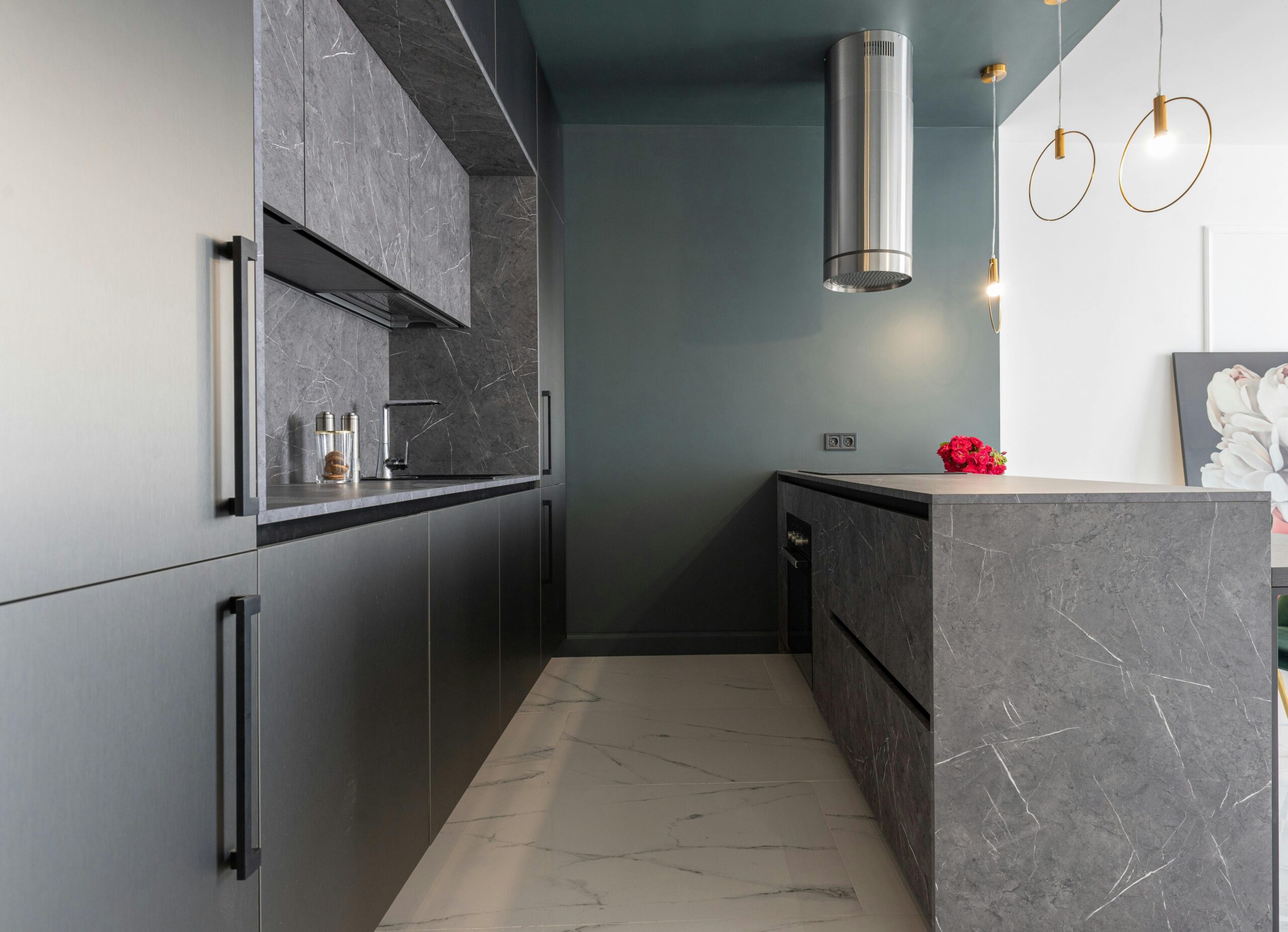
This is the part most granite vs quartz vs corian guides skip entirely. A granite or quartz slab is heavy — often 25–35 kg per sq ft once fitted — and it sits directly on your kitchen cabinet carcass. If that carcass is plywood or MDF, years of sink splashes and monsoon humidity cause it to swell and weaken exactly where the countertop’s weight is concentrated, especially around the sink cutout.
Here’s a scenario we see often: a homeowner spends ₹35,000 on a premium quartz countertop, sits it on a standard plywood cabinet, and within four to five years the cabinet edge under the sink has swollen from repeated water exposure. The countertop itself is still fine — but the cabinet can no longer support it evenly, and re-levelling or replacing the base means removing and re-fitting the expensive countertop too. The material that failed first wasn’t the one they spent the most on.
We build our modular kitchen cabinets in SS304 stainless steel, aluminium, or galvanised steel — materials that don’t swell, sag, or rot under a heavy stone countertop, no matter how much water hits the sink area. It’s the reason a granite or quartz top can genuinely last its full 15–20 year lifespan instead of needing early replacement because the cabinet underneath it failed first.
If you’re already choosing a premium countertop like quartz or corian, pairing it with a wood-based cabinet undercuts that investment. The two decisions aren’t separate — they need to be planned together, ideally before either purchase is finalised.
Which Countertop Is Best for Your Hyderabad Kitchen?
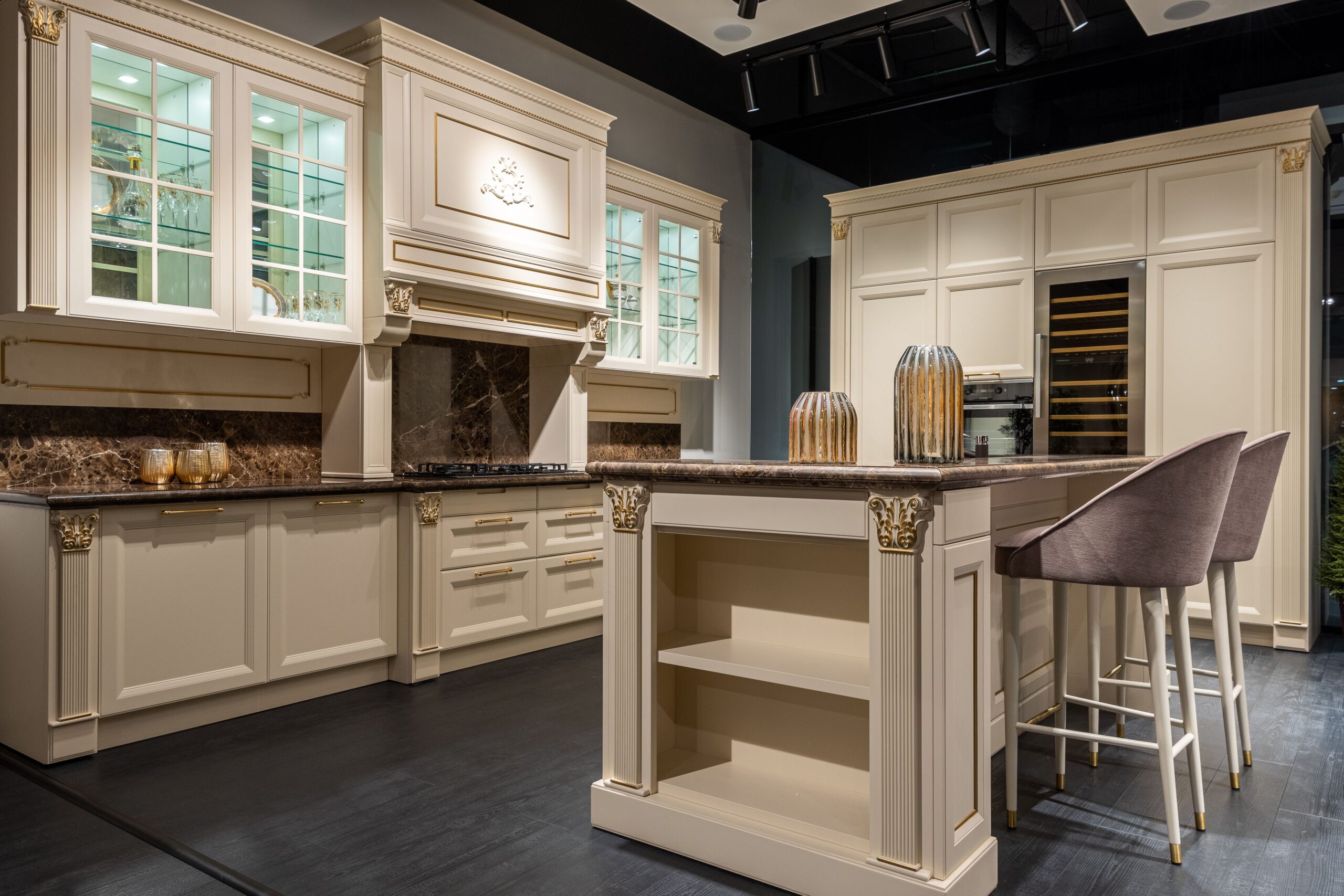
- Heavy daily cooking, budget-conscious: Granite — best heat tolerance, lowest cost, proven in Indian kitchens for decades.
- Low-maintenance, modern apartment kitchen: Quartz — consistent look, no sealing, strong stain resistance.
- Premium seamless design, curved counters or waterfall edges: Corian — best for aesthetics and repairability, but needs careful heat handling.
- Rental or resale-focused property: Granite — universally recognised, adds resale value without a big upfront cost.
Frequently Asked Questions
Which is cheaper — granite, quartz, or corian?
Granite is generally the most affordable option in Hyderabad, starting around ₹150 per sq ft for standard Indian stone. Quartz and corian both cost more, typically starting from ₹250–350 per sq ft depending on brand and finish.
Does quartz need sealing like granite?
No. Quartz is an engineered, non-porous material and does not require periodic sealing, unlike natural granite which needs resealing every 1–2 years to stay stain-resistant.
Can corian handle hot vessels directly from the stove?
Not reliably. Corian is more heat-sensitive than granite or quartz and can scorch if a hot pan is placed directly on it. Using a trivet is strongly recommended with corian countertops.
Do you install granite, quartz, or corian countertops?
We don’t manufacture or install countertops ourselves — we specialise in SS304 steel and aluminium modular kitchen cabinets. However, we coordinate closely with your countertop fabricator to ensure cutouts, support, and alignment are done correctly, and we’re happy to recommend trusted local fabricators.
Does my choice of countertop affect the cabinet material I should use?
Yes. Granite and quartz are heavy, and a plywood or MDF cabinet base can weaken over time under that load, especially near the sink. Steel and aluminium cabinets don’t swell or sag, which protects your countertop investment for its full lifespan.
Which countertop lasts the longest?
Granite typically lasts the longest — 20+ years with proper sealing — followed by quartz at 15–20 years. Corian has a shorter typical lifespan of 10–15 years but can be resurfaced to extend its life, which granite and quartz cannot.
Final Thoughts
There’s no single “best” answer in the granite vs quartz vs corian debate — it depends on your cooking habits, budget, and how much maintenance you’re willing to do. What does matter, regardless of which countertop you choose, is what it’s sitting on. A premium countertop on a cabinet that swells or weakens within five years is money lost twice over.
If you’re planning a new kitchen in Hyderabad, get your cabinet material sorted first — SS304 steel or aluminium gives any countertop a stable, moisture-proof base built to outlast it. Get in touch for a free, no-obligation quote and we’ll help you plan the whole kitchen as one system, not two separate decisions.
Ready to plan your new kitchen? Get a free quote for cabinets built to support any countertop you choose.
Explore our Modular Kitchens range or read our Stainless Steel Kitchen Cost vs Wooden Kitchen guide. Follow us on Instagram and Facebook.