
MM-C014 · Design concept
Steel Oak Glass Crockery with Black-Tinted Display Doors
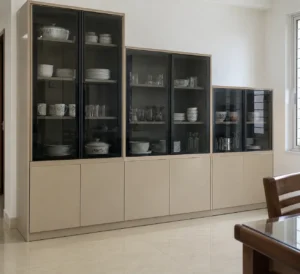
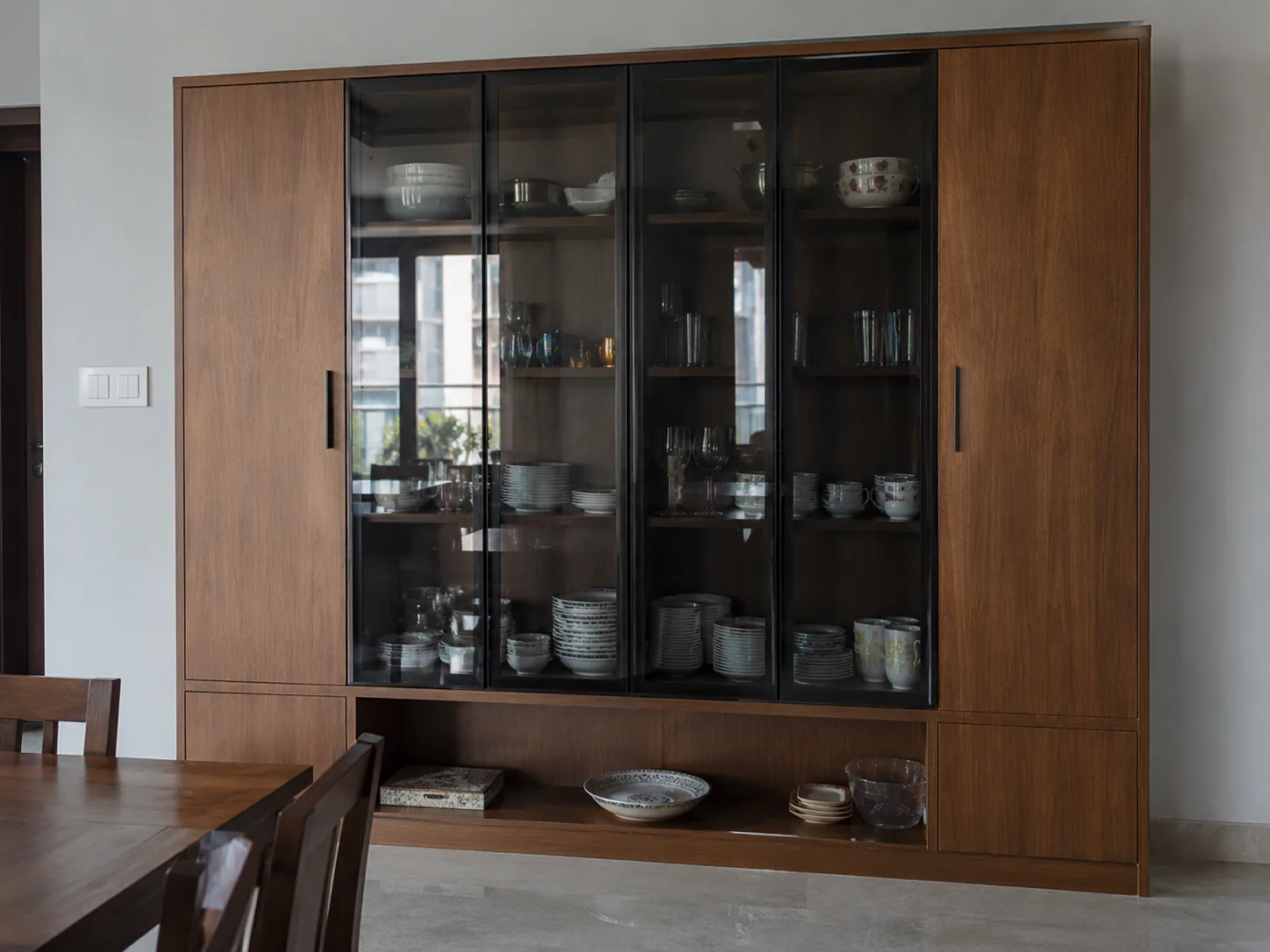
Four black-tinted glass doors sit between solid oak-look cupboards. This oak glass crockery concept adds a low open display niche beneath the central cabinet.
Oak Glass Crockery specifications
- Design ID
- MM-C014
- Visible arrangement
- Four central black-tinted glass doors, tall opaque oak-look cupboards at both sides, small lower side compartments and a low open niche
- Glass direction
- Black tinted glass; type, thickness and frame confirmed separately
- Finish direction
- Colour and surface direction shown in the concept; physical sample to be approved
- Base detail
- Grounded closed plinth; site levels and skirting checked on the drawing
- Metal construction
- Body metal, grade, thickness and shutter build selected for the measured installation
- Accessories
- Hettich accessories; compatible models and quantities specified in the quotation
- Specified cabinet material
- Steel cabinet system. Confirm grade, thickness, shutter build and finish on the approved measured schedule.
Plan oak glass crockery around your dining table.
For this oak glass crockery, check the four display-door swings against pulled-out dining chairs. The low niche is for reachable storage or display; request a different arrangement if you need a standing-height serving counter.
Explore crockery unit planning7 details in this oak glass crockery
Four dark-glass doors form the centre of this dining-wall composition. Solid oak-look side cupboards and a low open niche frame the display.
1. Four central black-glass display doors
The oak glass crockery reference has four narrow glazed doors across its central section. Black-looking frames divide the view into vertical bays. White plates, bowls and clear drinking glasses remain visible, even though the glass darkens the interior. This is a transparent display direction rather than a fully concealed cabinet.
The four-door rhythm matters when adapting the width. Widening each glass leaf changes both the appearance and the proposed hardware requirements. Ask for the revised door sizes and internal shelf divisions together. The picture does not establish whether every visible shelf spans a single bay or several bays. Confirm that arrangement and its support detail on the internal elevation. Glass treatment, thickness and retention are separate specifications; a dark appearance alone cannot identify them.
2. Solid cupboards at both sides
Two tall opaque sections flank the oak glass crockery display. Their wood-look faces extend from the upper frame to the line above the small lower side compartments. Dark vertical pulls sit close to the glass. This makes the central display the focal point while keeping the outer edges visually quieter.
Use these closed sections for contents you do not want visible, but choose their internal layout from your actual storage list. The render does not show whether they contain shelves, hanging space or another arrangement. Depth is also unconfirmed: they should not be described as shallow cupboards without measurements. If wide serving trays or tall jugs belong here, test their dimensions against the usable opening behind the frame and hinges. Check the pull positions against the nearby wall and the opening arc.
3. A low open niche beneath the display
The oak glass crockery has an open rectangular niche close to the floor, below the glass-door section. In the reference it contains a box, a decorative bowl and small stacks of dishes. It is not a waist-height serving counter. That distinction changes how you would use it during a meal.
Keep the low niche for pieces you are comfortable reaching down to retrieve, or for a small display. If your priority is setting down hot dishes while standing, ask for a different measured arrangement rather than assuming this niche serves that purpose. Its height, depth and shelf finish need to be shown on the drawing. Confirm how the bottom frame meets the floor and how the recess can be cleaned. Objects stored here remain exposed to room dust and accidental contact from nearby chairs.
4. Oak-look surfaces with a dark centre
This oak glass crockery depends on the contrast between warm wood-look outer panels and the darker centre. The reference suggests vertical grain on the tall side doors and a long horizontal frame across the top and base. The wood appearance describes the decorative direction, not the concealed cabinet-body material.
When choosing a laminate, compare adjacent samples for grain scale and colour variation. A very busy pattern across the two large outer doors will read differently from the restrained reference. Ask for the grain direction to be marked on the elevation and check the frame-to-door transitions. Approve the actual selected finish with the black profile sample. The image does not establish a catalogue code, species of timber, veneer product or laminate manufacturer, so those details must come from the chosen sample and quotation.
5. Reflections and the view through tinted glass
Strong window reflections cross the centre of the oak glass crockery image. Glassware can be seen behind those reflections, particularly against the dark internal background. The apparent transparency will change with daylight, interior light and the viewing angle from your dining table.
Place the proposed black-tinted sample near a window and look at actual dishes behind it. Check the effect with room lighting on and off before approving the tint. A display that seems discreet in a bright photograph may reveal more contents when lit from inside. Shelf lighting is not clearly established in this reference and is not assumed to be included. If requested, show its route, switching and maintenance access separately. Use the existing glass and finish guide to discuss sample choices, then record the selected glass and profile.
6. Steel body and compatible accessories
The specified direction for this oak glass crockery is a steel cabinet system with a decorative oak-look finish. The image cannot determine a steel grade, sheet thickness or the construction behind an opaque door. Keep these entries separate from the selected laminate and glass when reviewing the measured schedule.
Specify Hettich accessories compatible with the door widths, frame system and intended contents. Confirm hinge models, opening clearances and quantities rather than assuming a fitting series from the slim handles. The tall side doors and narrower glass doors may need different hardware selections. Record any shelf adjustments or organisers explicitly. If a wet-use feature is proposed later, review its materials separately: GI is not recommended for counters or water-use areas. This pictured dry-storage composition contains no visible sink.
7. Position the unit behind dining chairs
The dining table occupies the left foreground of the oak glass crockery reference. A chair is close to the lower niche and left cupboard. This is a useful reminder to review furniture movement together with cabinet openings. A visually balanced wall does not establish that a door can open when a chair is occupied.
Draw the table, pulled-out chairs and every shutter arc on the room plan. Check whether a person can retrieve plates while somebody remains seated. The wall switch shown to the left of the unit also needs to stay reachable. Your own sockets, switches, skirting and wall irregularities may require a revised position. Keep the rectangular perimeter and straight fabrication edges on the new elevation. Final width, height, depth and fixing depend on measured conditions; no dimensions are inferred from the render.
Organise the display before choosing shelf spacing
For this oak glass crockery, sort plates, glassware and serving pieces into the groups that will occupy the four visible bays. The reference places larger bowls higher, glasses around the middle and several plate stacks near the bottom. Those are visual cues rather than a prescribed loading arrangement. Decide which shelves need everyday access and review the weight of their actual contents.
A tall jug can consume the height that otherwise holds two shorter groups, so bring your largest pieces to the storage discussion. Review usable depth behind the glass and allow a dish to be removed without scraping the frame. Confirm shelf spans, supports and any adjustment positions in the internal drawing. Keep the display realistic: densely filled shelves will remain visible through the tint and create a different effect from a curated selection.
When to choose a full dining-wall display
This oak glass crockery suits a brief where the display is part of the room’s appearance. Its broad central glass section makes crockery a visual feature, while the solid side cupboards provide some concealed storage. The low niche adds a third storage type without creating a full serving counter. Choose the composition for those relationships, not simply for its brown colour.
Consider a different arrangement if you primarily need a standing-height serving area, extensive drawers or opaque storage for a large changing collection. Compare the proportions with other crockery design ideas before committing to the four-door centre. Changing the glass to frosted or fluted treatment can also change how ordered the contents appear. Discuss those choices on this existing design reference; they do not require another near-identical page or a new design ID.
Request the measured schedule and finish review
Use reference MM-C014 to connect your oak glass crockery selection with the actual quotation. Ask our crockery and bar unit team to show the four glazed doors, two solid side cupboards, lower compartments and low open niche on the elevation. Request the internal shelf drawing as well as the closed front view.
List the steel body, shutter construction, oak-look surface, black profiles, selected glass and compatible Hettich fittings separately. Confirm wall fixing, delivery access and installation preparation for the measured modules. Clean the installed glass and laminate using the selected suppliers’ care instructions, keeping stored dishes dry. Request a quote and free site visit to resolve the scope. No completed-project claim, fixed price, delivery promise or warranty is established by this concept.
More crockery design ideas

Plan your oak glass crockery.
Share MM-C014 and request an itemised schedule for your room.