
MM-C009 · Design concept
Aluminium Champagne Crockery with Fluted Glass Doors
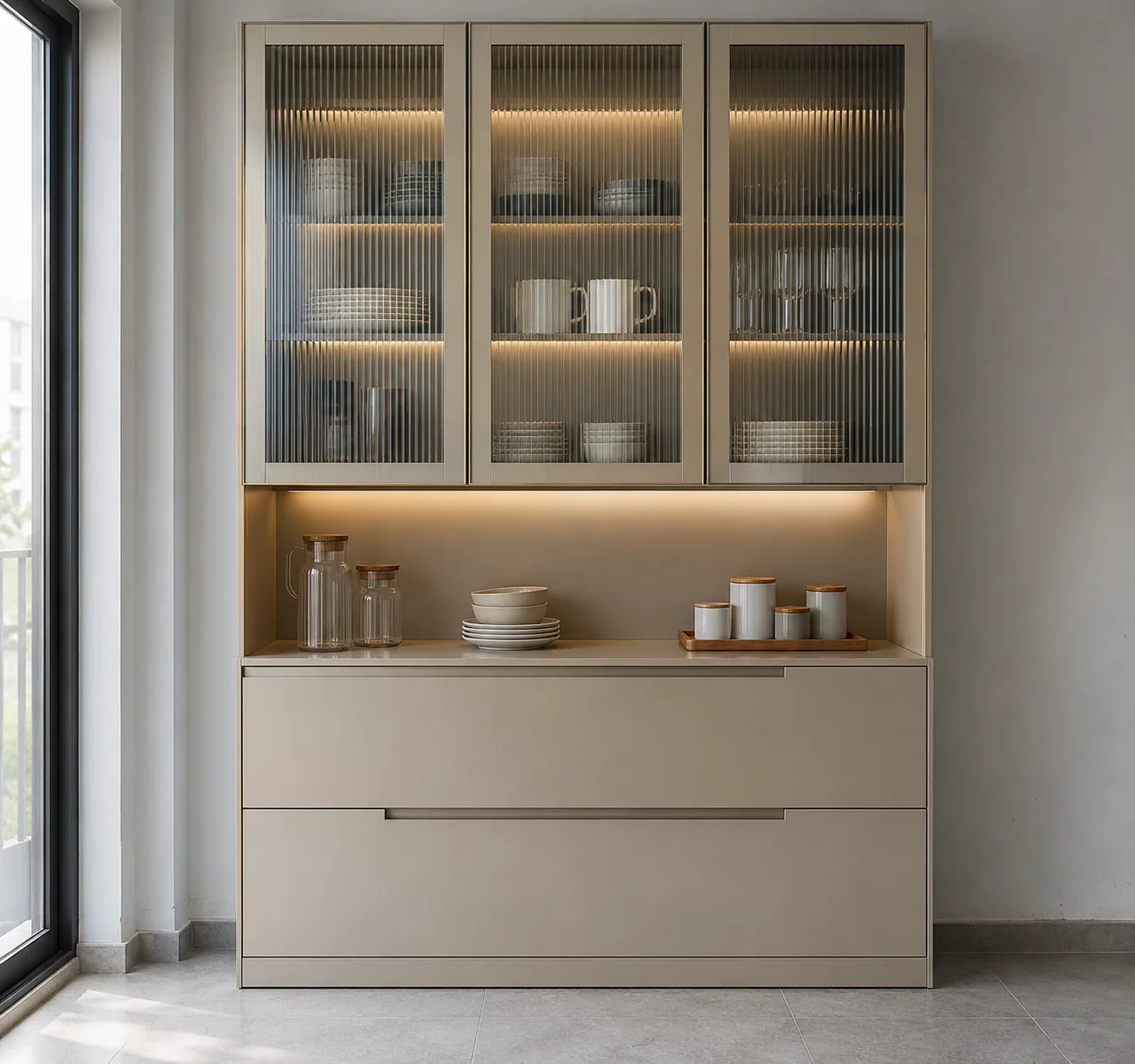
Three fluted-glass doors sit above a lit serving niche and two broad drawers. This champagne crockery concept pairs a solid matte finish with straight metal edges and a grounded base.
Champagne Crockery specifications
- Design ID
- MM-C009
- Visible arrangement
- compact full-height cabinet with three upper vertically fluted glass doors, open serving recess, two wide flat base drawers
- Glass direction
- Fluted glass; type, thickness and frame confirmed separately
- Finish direction
- Champagne solid matte laminate
- Base detail
- Grounded closed plinth; site levels and skirting checked on the drawing
- Metal construction
- Body metal, grade, thickness and shutter build selected for the measured installation
- Accessories
- Hettich accessories; compatible models and quantities specified in the quotation
- Specified cabinet material
- Aluminium cabinet system. Confirm grade, thickness, shutter build and finish on the approved measured schedule.
Make space for serving and storage.
Measure the dining wall, your largest dishes and the chair clearance. Keep everyday crockery accessible and confirm every door opening on the drawing.
Explore crockery unit planning7 choices for this champagne crockery
Keep the three-door display, open serving niche and two-drawer base as the starting composition. Review the details below against your dining wall.
1. Three tall fluted-glass doors
The champagne crockery display is divided into three vertical doors. Pale rectangular frames outline the ribbed glass, while the cabinet sides continue down to the floor. The upper part is enclosed rather than a set of exposed shelves. This keeps the front visually ordered when the crockery inside includes different shapes and colours.
The reference shows stacked plates, mugs and glasses behind the fluting. The ribs soften their outlines; they do not make the contents invisible. If you want to retain this effect, review a fluted sample with your own dishes behind it. Confirm the shelf positions and actual number of shelves on the internal drawing. The image cannot establish glass thickness, safety treatment or shelf load capacity.
2. An open niche for serving
The middle of this champagne crockery is an open recess extending across the cabinet width. A concealed-looking strip lights the back of the niche. The pictured arrangement leaves a clear central area, with tall glass vessels to the left and a small serving tray to the right. It works as a handover surface between storage and the dining table rather than another glazed cupboard.
Measure the tallest jug or dispenser you intend to leave here before setting the recess height. Check that it can be lifted out without touching the upper cabinet. A coffee machine is not shown: if you want one, its ventilation, plug access and water handling change the brief. Specify the serving surface separately from the aluminium body, including how spills and exposed edges will be handled.
3. Two broad base drawers
Below the niche, two horizontal fronts give the champagne crockery a quiet, closed base. Slim recessed-looking pull lines sit near their upper edges. The drawers visually contrast with the three narrow glass doors above; matching every upper door joint with a lower joint would create a different composition.
Use an internal drawer drawing to decide what belongs in each level. Cutlery, table linen and shallow serving pieces need different organisers from deep bowls. The closed fronts do not reveal the usable depth, runner system or number of internal compartments. Ask for those dimensions after the compatible Hettich fittings are chosen. When checking chair clearance, show the full drawer extension and a pulled-out dining chair together. A clear view of the closed cabinet is insufficient for that check.
4. A solid champagne finish with square edges
This champagne crockery uses a muted, solid-colour direction rather than visible timber grain. Its broad lower fronts and the pale glass frames should be reviewed together. The reference suggests a restrained matte appearance, but a render cannot establish an actual laminate product, colour code or gloss measurement.
Compare the proposed champagne laminate sample with the dining floor and wall. A warmer sample can look beige under warm lighting and cooler beside daylight. Test the same sample in both conditions before selecting it. Keep the straight rectangular top, flat drawer fronts and grounded plinth on the revised elevation. Avoid introducing curved corners if you want to preserve this square-cut metal composition. Record the chosen laminate and edge detail on the material schedule.
5. Lighting beside a window
The pictured champagne crockery stands beside a tall window on the left. Daylight illuminates that edge, while horizontal warm-looking light lines define the display shelves and the serving recess. This combination creates depth in a relatively narrow cabinet; the lighting is a visible design direction, not a confirmed inclusion.
Check the proposed glass in your actual room from seated dining height as well as standing height. Reflections and the visibility of plates change when the internal lights are switched on. If you choose lighting, specify fittings, cable routes, driver access, switching and electrical work separately. The three upper doors must open without striking curtains, blinds or adjacent trim. Leave servicing accessible rather than sealing lighting components permanently behind the cabinet.
6. Aluminium body and compatible Hettich fittings
The specified direction for this champagne crockery is an aluminium cabinet system. The colour and glass are decorative choices; they do not identify the body grade, sheet thickness or concealed shutter construction. Our crockery and bar unit service should remain the commercial parent for the measured design.
Use Hettich accessories compatible with the chosen metal, drawer sizes and glass-door frames. Confirm the hinge and runner models, quantities and included organisers in the quote. Square metal fabrication and glass retention need their own details. If an alternative metal is discussed, keep wet-use requirements explicit: GI is not recommended for counters or water-use areas. The concept does not identify a certified fitting load or a hidden door core.
7. Adapt the proportions to your dining wall
This champagne crockery is a compact vertical composition. Its full-height outline suits a single cabinet position better than a long wall of separate modules. Retaining three upper doors and two broad drawers is a useful starting brief, but the final width and height must come from the room measurements.
Mark the window edge, skirting, nearby switches and table position on the elevation. Check the upper-door opening arcs, not only the drawer extension. Changing the cabinet width may require new door divisions or shelf supports; a wider version should not simply stretch the picture. Ask for the revised glass-to-frame proportions to be shown before approval. The image provides no defensible manufactured dimensions, so none are assigned to this concept page.
Quotation, care and next steps
Share reference MM-C009 when requesting your champagne crockery quotation. Ask for the three-door display, serving niche, two-drawer base, selected aluminium system, champagne laminate, glass treatment and compatible Hettich accessories to appear as separate schedule items. Include any lighting and installation preparation explicitly. This ties the appearance you selected to a scope that can be reviewed.
Keep glass and laminate care instructions with the final specification. Clean fluted grooves using the selected glass supplier’s method, keep stored dishes dry and wipe the serving surface after use. The glass and finish guide supports sample selection. You can request a quote and free site visit; no free design service, price, delivery period or warranty is implied by this concept.
Is this champagne crockery right for your room?
Choose this arrangement when you want one compact dining cabinet to combine a visible dish collection, a temporary serving surface and concealed lower storage. Its upper glass occupies most of the elevation, so the items behind the three doors remain part of the room’s appearance. The two lower drawers provide visual calm, but this is not an opaque full-height cupboard that hides everything.
The champagne crockery can be a useful reference for a wall beside a window, provided the measured door swings and curtains are compatible. Its light frame creates a quieter transition to a pale wall than a strong black display outline. Review that relationship with your actual dining furniture. The warm-looking internal lights in the image should be treated as an option to specify, not an assurance about the installed colour temperature.
Reconsider the arrangement if your priority is storing very tall appliances, hiding a large changing collection or using a wet bar. The serving niche is shown for dry dining items and has no visible sink. A different cabinet schedule may be necessary for those needs. When looking through other crockery designs, compare the share of open, glass-front and closed storage rather than selecting by colour alone. Bring this champagne crockery reference and your actual storage list to the site visit.
More crockery design ideas
Plan your champagne crockery.
Share MM-C009 and request an itemised schedule for your room.