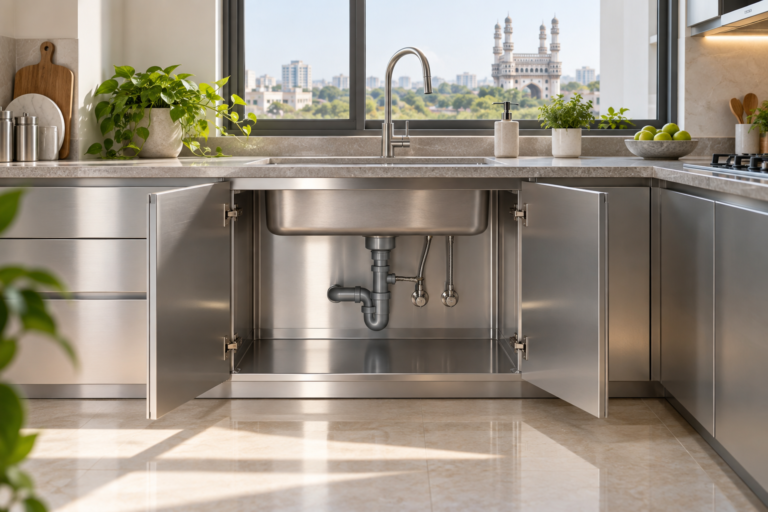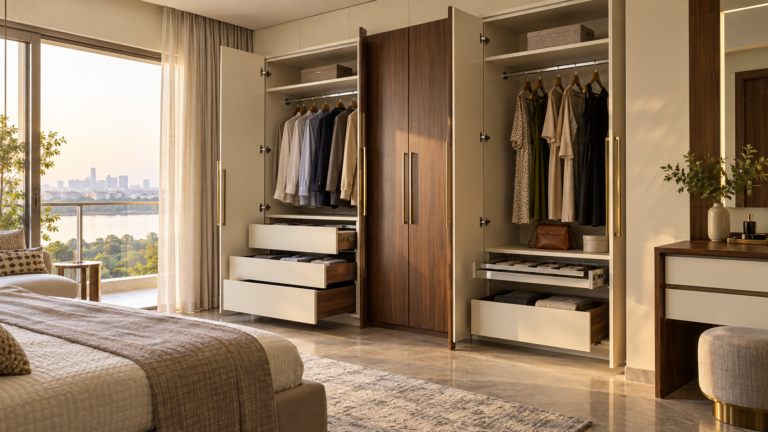

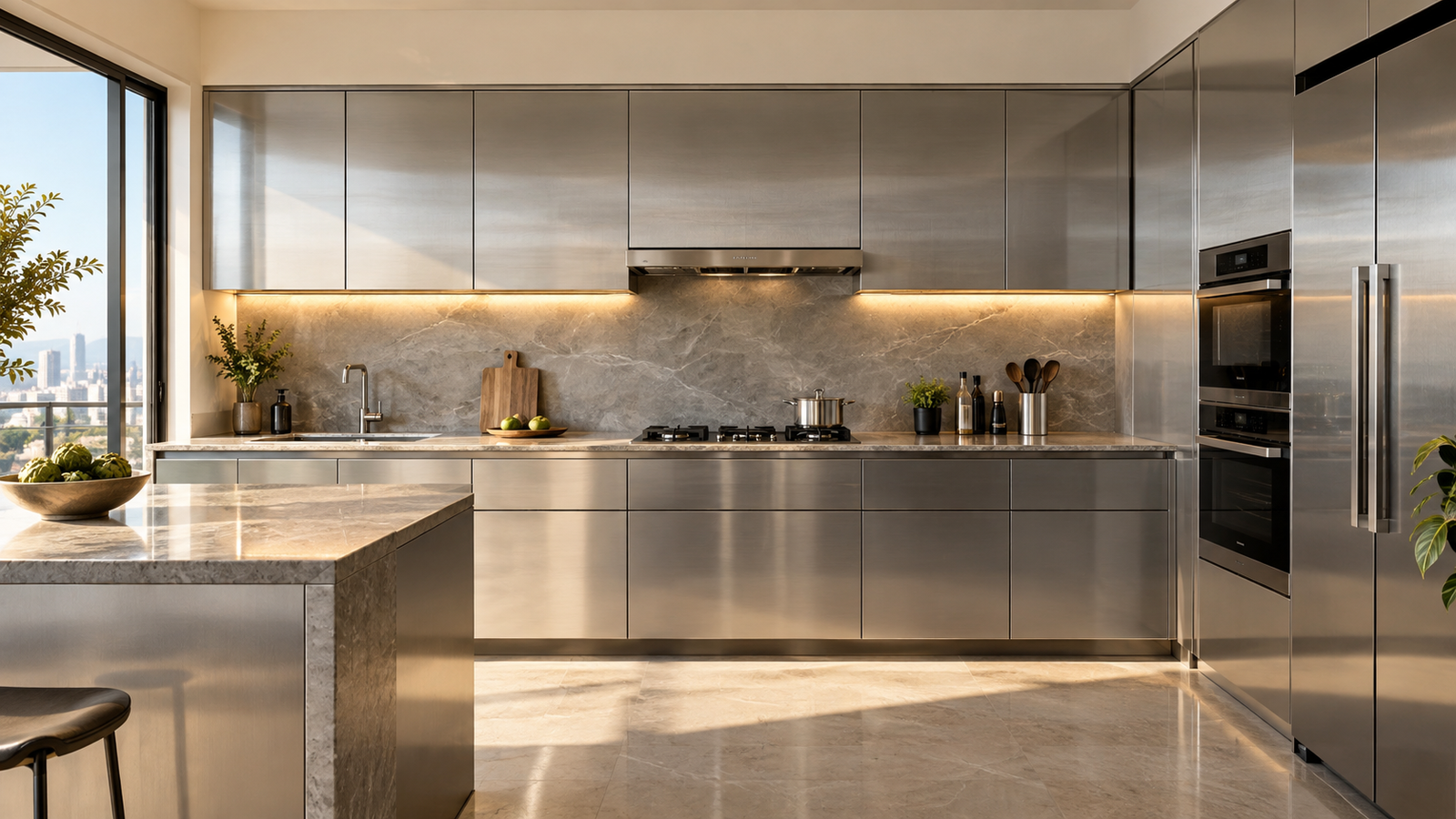
Need kitchen cabinet repair in Hyderabad? A moisture-resistant metal cabinet system with accurate hinge alignment helps prevent recurring warped shutters. Request an approximate estimate for your kitchen.
A kitchen cabinet door can look warped because the panel itself has changed shape, because a hinge or fixing has moved, or because the carcass it hangs on is out of level or out of square. Humidity, one-sided heat and heavy loads bend a wood-based shutter, while loose hardware mimics warping on a door that is still flat. The correct repair depends on which of those has actually moved, so diagnose the geometry before ordering a replacement door.
A misaligned door is one of the most common complaints in an ageing kitchen, and it is also one of the most misdiagnosed. Homeowners often assume the shutter is finished and reach for a new one, when in fact a hinge has loosened, a screw has stripped or the cabinet has settled a few millimetres out of level. In other cases the door really has bowed, and tightening hardware will never bring it back. The two problems look almost identical from the front, which is why the useful first step is to separate the panel from everything holding it.
This guide explains why kitchen cabinet doors warp in practical terms for Hyderabad homes, where a long monsoon and humid summers test cabinet shutters every year. It works through the whole assembly — the door panel, the hinge, the carcass, the installation and the room itself — and shows how to tell panel movement apart from hardware and alignment faults before deciding to adjust, repair or replace. Metal & More Interiors designs and manufactures metal interiors in-house from its factory at B.N. Reddy, Charlapally, with its office at Jai Jawahar Nagar, Yapral Ammuguda Road, Secunderabad.
Why Kitchen Cabinet Doors Warp: Quick Answer
Doors that warp fall into three groups. The first is genuine panel movement, where a wood-based shutter takes on or loses moisture unevenly and curves, cups or twists out of flat. The second is hardware movement, where a hinge plate has come loose, a fixing has stripped or the door is overloaded, so the shutter sags and the gaps change without the panel bending at all. The third is carcass geometry, where the cabinet itself is out of level or out of square and forces an otherwise straight door to sit crookedly.
A simple order of checks is enough to tell them apart. Lay a straight edge across the face of the door to test flatness, measure the gaps on the hinge side and the handle side, then look at the hinge plates and the level of the cabinet. If the panel is flat and the gaps are uneven, the fault is almost always the hinge or the carcass, not the door.
Prevention follows the same logic. A shutter stays flatter when its edges are sealed, when it is not exposed to one-sided heat, when it is carried on the correct number of hinges, and when the cabinet is installed level and square on a stable plinth.
What “warping” really describes
“Warp” is used loosely for several different faults. A door can bow gently across its width, cup along one edge, twist so that opposite corners no longer lie in the same plane, or simply hang so that the gaps change from top to bottom. Each of these has a different cause, and a repair that suits one will not cure another. Calling all of them “warping” is the first reason people buy the wrong fix.
A wood-based shutter moves because its two faces rarely behave in exactly the same way. If one face or one edge takes on more moisture than the other — because a sink, a dishwasher or a damp wall is close by, or because the inner face is better sealed than the outer — that face grows slightly more than its opposite. The panel then curves toward the drier side. The same thing happens in reverse when direct heat or strong sunlight dries one face faster than the other, and it is why a built-in oven or a west-facing window can bow the doors nearest to it.
Not every small change is a fault. Most shutters grow or shrink slightly from season to season, and a door that closes a little more firmly in the monsoon is behaving normally. Real warping is a permanent change of shape that a hinge adjustment cannot correct. The test is simple: hold a straight edge or a taut string across the door and look for a gap between the edge and the panel. A flat door will touch or sit within a millimetre; a warped door will show a clear curve.
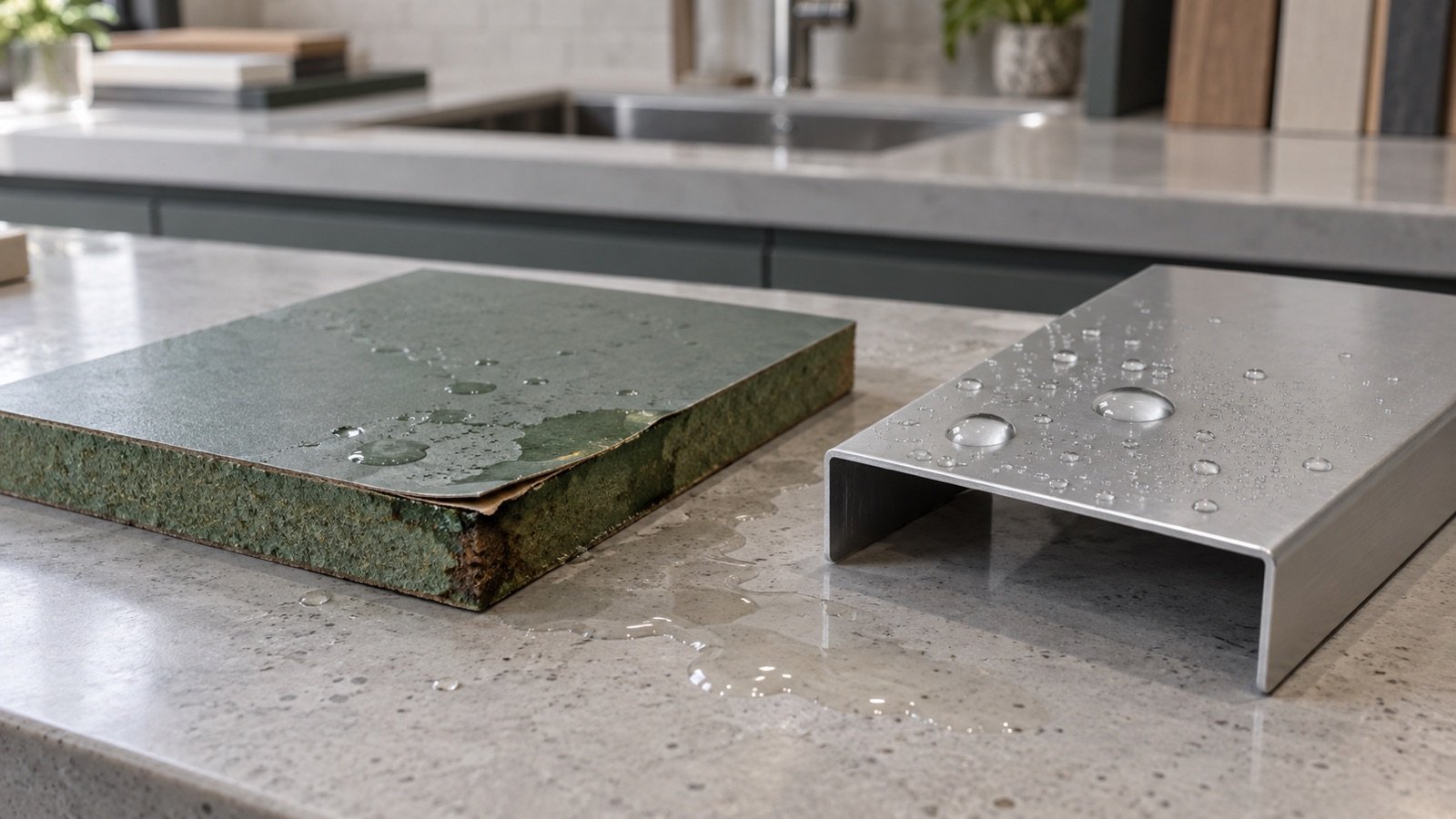
Metal shutters behave differently because they have no absorbent wood core. A fabricated stainless-steel, aluminium or galvanised-steel door does not swell when the air turns humid, so the differential movement that bows a board panel simply does not arise. Flatness instead depends on the design: folds, returns, internal reinforcement and the way the panel is joined to its frame all control how rigid the finished door stays. Metal is not immune to every problem — a very wide, unsupported panel can still deform under heat or impact — but it removes the moisture mechanism that causes most warping in a kitchen.
Why kitchen cabinet doors warp: the causes that matter
Warps rarely arrive without a reason. Almost every case traces back to one of a handful of conditions, and the same conditions repeat whether the kitchen is new or twenty years old.
Humidity and moisture movement
Hyderabad’s climate makes humidity the leading cause. During the monsoon and through the humid weeks that follow, the air around a cabinet can stay damp for days at a time. A board shutter absorbs some of that moisture through its faces and, more importantly, through any edge that is not fully sealed — a cut-out, a drilled hole, a chipped edge or the back of a door that was never finished. If moisture reaches one face or edge faster than the other, the panel bends. Doors nearest the sink, the dishwasher and any damp external wall warp first because they see the most moisture.
Heat, sunlight and one-sided drying
Heat works on a shutter in the opposite direction. Strong sunlight through a window, or the warmth of an oven and a hob, dries the exposed face and shrinks it slightly while the sheltered face stays as it was. The result is a panel that bows toward the heat. This is easiest to spot on doors that face a window or sit immediately beside a built-in oven. The same effect makes a door that was installed in a cool, dry room behave differently once the kitchen is in daily use.
Panel construction, edges and door width
Two doors of the same size can behave very differently depending on how they are built. The board grade, the density of the core, the sealing of every edge after cutting, and the finish applied to both faces all decide how much a shutter moves and how evenly it does so. Wide single doors are the most vulnerable, because a small amount of movement across a broad panel produces a visible bow. A narrower door, or a framed design with proper internal support, resists the same conditions far better. The mechanism behind board swelling is covered in detail in the guide to why plywood kitchen cabinets swell.
Hardware, load and hinge fatigue
Hinges carry the weight of the door every time it opens, and a door that is heavier than its hardware was chosen for will eventually drop. A plate rack loaded with cast iron, a spice shelf hung on the inside of a door, or simply a thick, heavy shutter on two small hinges will pull the door out of line. Over time the top hinge loosens, the fixing spins in its hole, and the door sags so that the gap closes at the bottom and opens at the top. This looks exactly like warping, but the panel is still perfectly flat, which is why checking a straight edge matters before blaming the door.
An out-of-level or twisted carcass
A cabinet is only as square as the surface it stands on and the wall it is fixed to. If the carcass is a few millimetres out of level, or twisted so that opposite corners are not equal, every door hung on it will sit crookedly. Doors may bind at one corner, push against each other, or spring open on their own. Measuring the two diagonals of the cabinet front is the quickest test: if they differ, the carcass is out of square and no amount of hinge adjustment will make the doors sit evenly until the cabinet itself is corrected.
Installation clearance and the wrong hinge count
Doors need a small, even gap at every edge. If the clearance is too tight, a door that grows slightly in humid weather will rub against the frame or its neighbour, and the pressure can twist it over time. If too few hinges are fitted for the size and weight of the door, the panel is asked to carry a load it was not designed for. Both are installation faults rather than material faults, and both are avoidable when the door width, weight and hinge specification are matched before the kitchen is assembled.
| Factor | Wood-based shutter | Fabricated metal shutter |
|---|---|---|
| Moisture | Absorbs moisture unevenly at unsealed edges and faces, so the panel can bow or cup. | Non-absorbent body; humidity does not swell the panel, so flatness is not moisture-driven. |
| Heat | One-sided heat or sunlight can dry a face and bow the panel toward the heat. | Fire-resistant as a material; flatness depends on folds and reinforcement rather than a core. |
| Edge sealing | Critical — every cut, hole and edge must be sealed to slow moisture entry. | No absorbent core to protect; fabricated edges are folded or finished as part of the panel. |
| Load and span | Stiffness comes from board thickness and core density; wide doors are more vulnerable. | Stiffness comes from folded profiles and planned reinforcement across the panel. |
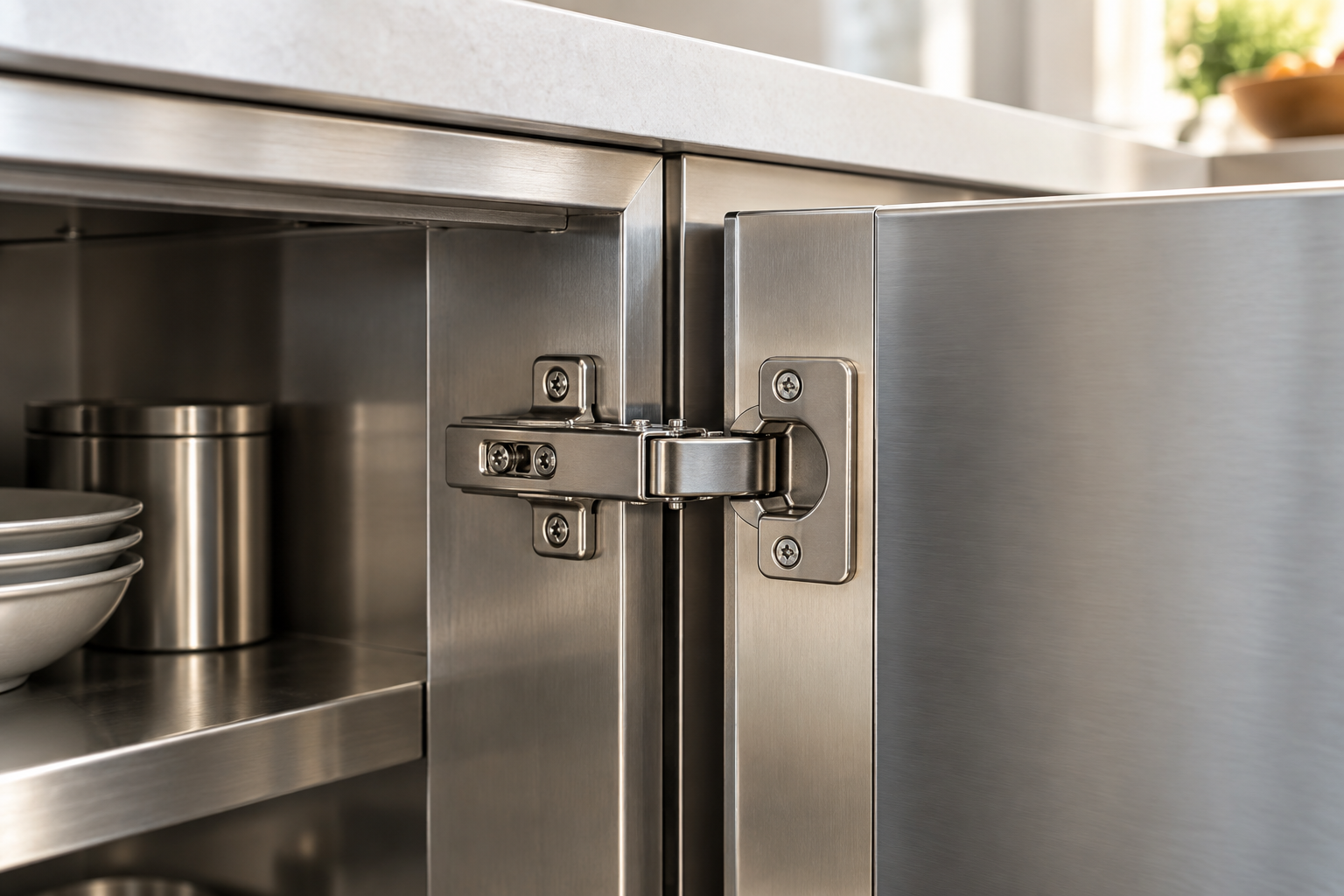
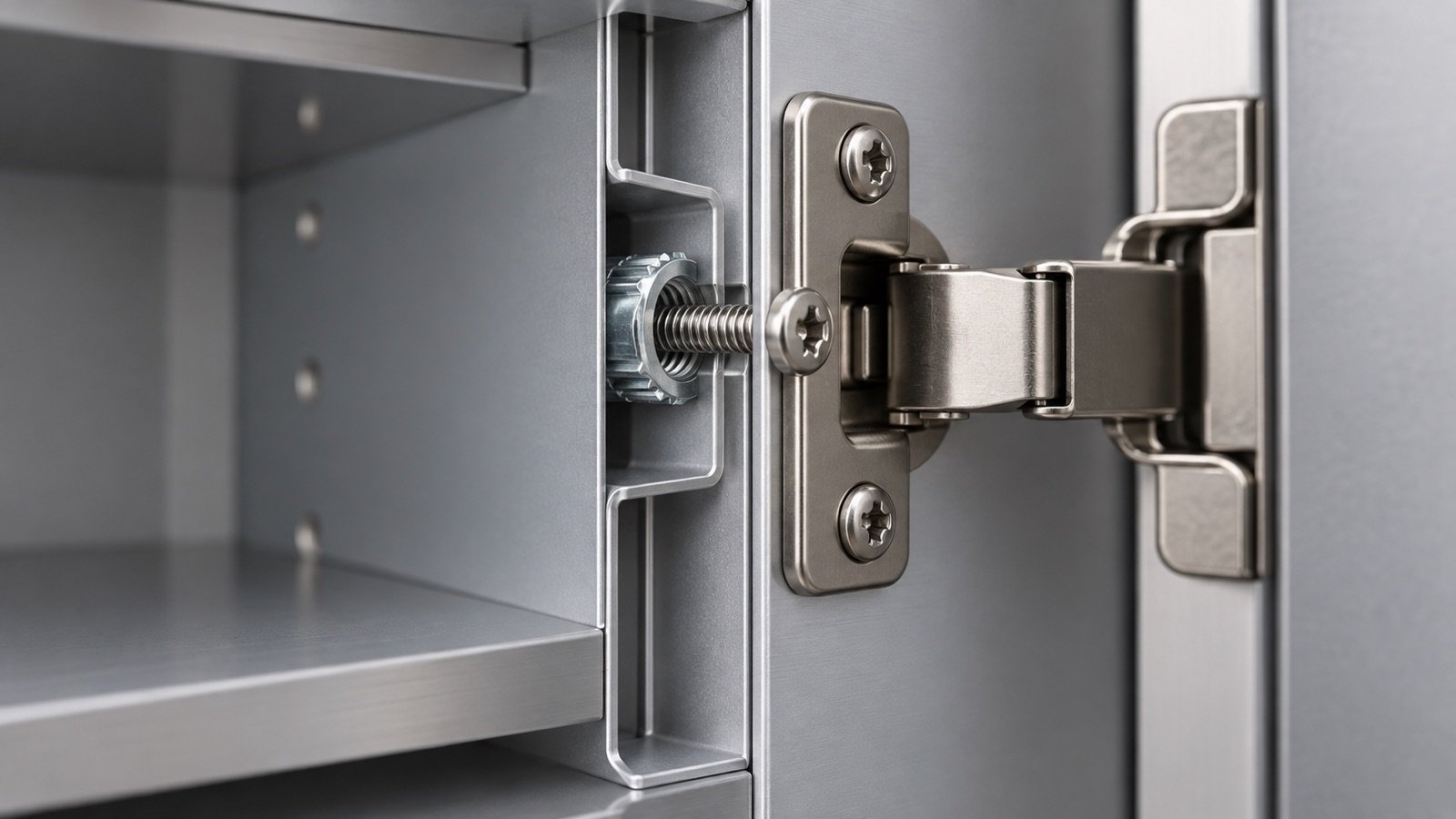
| Fixing | A screw into a softened board can strip and lose its hold after adjustment. | A threaded insert forms a repeatable fixing point for assembly and future service. |
| Maintenance | Wipe dry and control damp air; a leak or spill should be attended to quickly. | Non-absorbent and easy to wipe; clean with suitable products and avoid harsh chlorides. |
How to diagnose which part has actually moved
A diagnosis works best as a short sequence of checks, each of which rules out one possibility. Start with the door itself, then the hardware, then the cabinet, then the room. Do not begin by ordering a replacement door, because a flat panel on a loose hinge or a crooked carcass will not solve the complaint.
First, photograph the affected doors and note when the problem began. A door that changed after the monsoon points to moisture; one that changed after a new appliance was installed points to heat or load; one that has slowly sagged over years points to hardware or the carcass. Then measure the gaps at the top, middle and bottom on both the hinge side and the handle side. Even gaps suggest the door is flat and the opening is true; uneven gaps suggest the door has dropped or the carcass has settled.
Next, test the panel directly. Lay a straight edge or a taut string across the face and look for a gap, and sight along the edge of the door from a low angle to check for twist. If the panel is flat, move to the hardware: open the door fully, check that each hinge plate sits flush against the carcass, and try each fixing screw gently to see whether it holds or spins. A screw that turns without tightening means the fixing point has failed, not that the door has warped.
Finally, check the cabinet and the room. Put a spirit level on the base and the front edge of the carcass and compare the two diagonals of the opening. Look for a nearby source of moisture or heat, and check the seals around the counter, the sink and the wall behind the cabinet. If several doors in one run are out, the fault is almost certainly the cabinet or the room rather than a single door.
| Check | What to examine | Why it matters |
|---|---|---|
| Door flatness | Lay a straight edge across the face and sight along the edge for twist. | Confirms whether the panel itself has changed shape or is still flat. |
| Gaps | Compare the gap at the top, middle and bottom on both sides of the door. | An uneven gap points to a hinge or carcass fault rather than a bowed panel. |
| Hinge plates | Check that plates sit flush and that fixing screws tighten rather than spin. | A loose or stripped fixing is a common cause of apparent warping. |
| Hinge count | Match the number and type of hinges to the door width and weight. | Too few hinges lets a heavy door sag and pull out of line. |
| Carcass level | Use a spirit level on the base and front edge, and compare the diagonals. | An out-of-level or twisted carcass forces every door to sit crookedly. |
| Moisture and heat | Look for damp walls, leaks and nearby heat or direct sunlight. | Identifies the condition that started the movement and prevents a repeat. |
The most useful questions are specific. Is the door flat against a straight edge, or has it genuinely bent? Do the hinges hold their fixing, or has the fixing point failed? Is the cabinet level and square, and is the clearance around the door even? Once those questions are answered, the fix is usually obvious, and a decision to replace the door is made on evidence rather than assumption.
How Metal & More builds doors that stay flat
Metal & More Interiors designs and manufactures metal interiors in Hyderabad, with SS304 stainless steel, aluminium and GI cabinetry fabricated in-house. The practical difference for a warped-door problem is that the shutter body has no wood core to absorb moisture, so the humidity that bows a board panel in the monsoon does not change the shape of a metal door at all. Flatness is designed in rather than left to chance.
Each door is built with planned folds, returns and internal reinforcement, then joined to a carcass that is checked for square during fabrication and again at installation. Because the panels are made in-house, the door width, hinge positions and support are decided for the specific cabinet instead of being copied from a standard size. Doors and drawers are pre-assembled and inspected before they leave the workshop, so alignment is corrected before the kitchen is handed over.
Modules use an Insert Nut Fastening System: a threaded insert forms a controlled fixing point inside the fabricated metal, so a hinge can be loosened and re-fitted during service without stripping the panel. This matters for heavy doors, because the fixing point stays reliable even after repeated adjustment. Kitchen and wardrobe depth is planned around 2 feet where applicable, then adjusted for the wall, appliances, services and circulation. Warranty follows the approved material schedule: lifetime on stainless steel and aluminium, and 15 years on GI, subject to the written project terms. Hettich hardware can be specified where selected; it is not claimed automatically for every fitting.
Service access is designed before production, so a door, hinge or shelf can be worked on later without damaging the surrounding finish. Metal is termite-proof as a material, non-absorbent and easy to clean, and it is accurately described as fire-resistant near a hob or oven.
Choosing a shutter that stays flat: SS304, aluminium or GI
If a door keeps warping because the room is humid, or because a replacement would meet the same damp air, the material of the shutter matters as much as the fix. Three metals cover most residential kitchens, and the right choice depends on the zone, the load and the finish you want.
SS304 stainless steel
SS304 is the usual choice for demanding wet zones and heavy-use doors. Its non-porous, corrosion-resistant surface is hygienic and easy to wipe, and it does not absorb water, so a sink-base or dishwasher-adjacent door is not affected by humidity. Confirm the grade and finish, and clean it with suitable products rather than harsh chloride-rich cleaners or steel wool that can mark the surface.
Aluminium
Aluminium is light, corrosion resistant and useful across kitchens, wardrobes and storage. It suits positions where a lighter door is an advantage, provided the profile, reinforcement and hinge fixing are designed properly. It can carry warm, residential finishes instead of looking industrial, which makes it a practical option for large doors that would otherwise be heavy on their hinges.
GI
Galvanised steel adds a zinc protective layer and is normally paired with a painted or powder-coated finish. Coating continuity at folded edges and the care instructions should be clear. Metal & More Interiors provides a 15-year warranty on GI under the written project terms. A powder-coat finish for metal interiors is a common way to give a galvanised or aluminium door a durable, even colour that resists chipping.
Whichever metal is chosen, the finish and the hinge still have to match the door. Where a kitchen keeps bending board shutters, it is worth comparing a shutter with no absorbent core at all before replacing like with like; a stainless steel modular kitchen in Hyderabad or a lighter aluminium modular kitchen removes the moisture mechanism rather than managing it.
Adjust, repair or replace: a decision checklist
Work through the checks in order, and the correct action usually follows from the diagnosis. Adjust first where the hardware allows it, repair where a single component has failed, and replace only where the panel or carcass has permanently changed shape.
- A flat door with uneven gaps: adjust the hinges before touching the door.
- A screw that spins or a plate that will not sit flush: repair the fixing point rather than the door.
- An out-of-level or twisted carcass: re-level and re-fix the cabinet first.
- A panel that fails the straight-edge test: the door has warped and generally needs replacing.
- Doors rubbing or binding in humid weather: check the edge clearance and hinge count.
- A heavy door on too few hinges: add hinges or specify a lighter shutter.
- A leak, a damp wall or one-sided heat: remove the cause before any repair is agreed.
- Recurring warping in the same place: change the material, not only the door.
Handle choice is part of the same planning. A heavy handle on a light door can add to the load the hinges must carry, and a badly positioned fixing can start a crack at the edge of the panel. Specifying the right customised cabinet handles for the door weight keeps the shutter balanced and the hinges within their design load.
A clear quotation should make the choice easier. Two kitchens can look identical on a drawing while using very different shutters, hinge counts and fixing systems. For a door that keeps moving, the more useful question is not which board is marginally more stable, but whether the shutter body can take on water and change shape at all.
Frequently asked questions
Can a warped cabinet door be straightened?
A hinge adjustment can correct a door that has simply dropped or misaligned, and the panel will stay flat. A board panel that has permanently bowed, cupped or twisted usually cannot be flattened reliably, because the fibres have already changed shape. Test with a straight edge: if the face is flat, adjust the hardware; if it is curved, plan for a replacement.
Why do doors move during monsoon?
Humid air is absorbed unevenly by a wood-based shutter, so one face or edge grows slightly more than the other and the panel bends. Gaps that tighten in the monsoon are normal as the door expands; a door that stays bowed once the air dries has warped permanently and should be inspected.
Do metal shutters warp?
Metal doors do not swell by absorbing humidity, so the moisture-driven warping that affects board panels does not occur. A very wide or poorly supported metal panel can still deform under strong heat or impact, which is why folds, reinforcement and correct hinge support are designed into the door.
Will new hinges fix the problem?
Only when the hinge or its fixing is the cause. New hardware can correct a sagging door or a stripped fixing point, but it cannot flatten a panel that has bowed or straighten a carcass that is out of square. Diagnose the panel and the cabinet before buying hinges.
How can I tell whether the door or the cabinet is at fault?
Lay a straight edge across the door. If it is flat but the gaps are uneven when closed, the fault is almost always the hinge or the cabinet. Measure the cabinet diagonals and check it with a spirit level; a difference between the diagonals means the carcass, not the door, needs attention.
Can warping be prevented in a new kitchen?
Largely, yes. Seal every edge and cut-out, keep doors away from one-sided heat and direct sunlight, fit the right number of hinges for the door weight, leave even clearance on all sides, and ventilate damp zones. Choosing a shutter with no absorbent core removes the main cause altogether.
Final decision
Treat why kitchen cabinet doors warp as a question about geometry, not just material. Decide whether the panel, the hinge or the carcass has moved, then act on that finding: adjust hardware where it has drifted, repair a failed fixing, re-level a settled cabinet and replace a door only when the panel itself has changed shape. If the same door keeps warping because the room is humid or a heat source is close by, changing the door without changing the cause will only repeat the problem.
Metal & More Interiors can measure the room, inspect the affected doors and recommend SS304, aluminium, GI or a documented mixed-metal configuration for the specific zone. The office is at Jai Jawahar Nagar, Yapral Ammuguda Road, Secunderabad, and manufacturing is at B.N. Reddy, Charlapally.