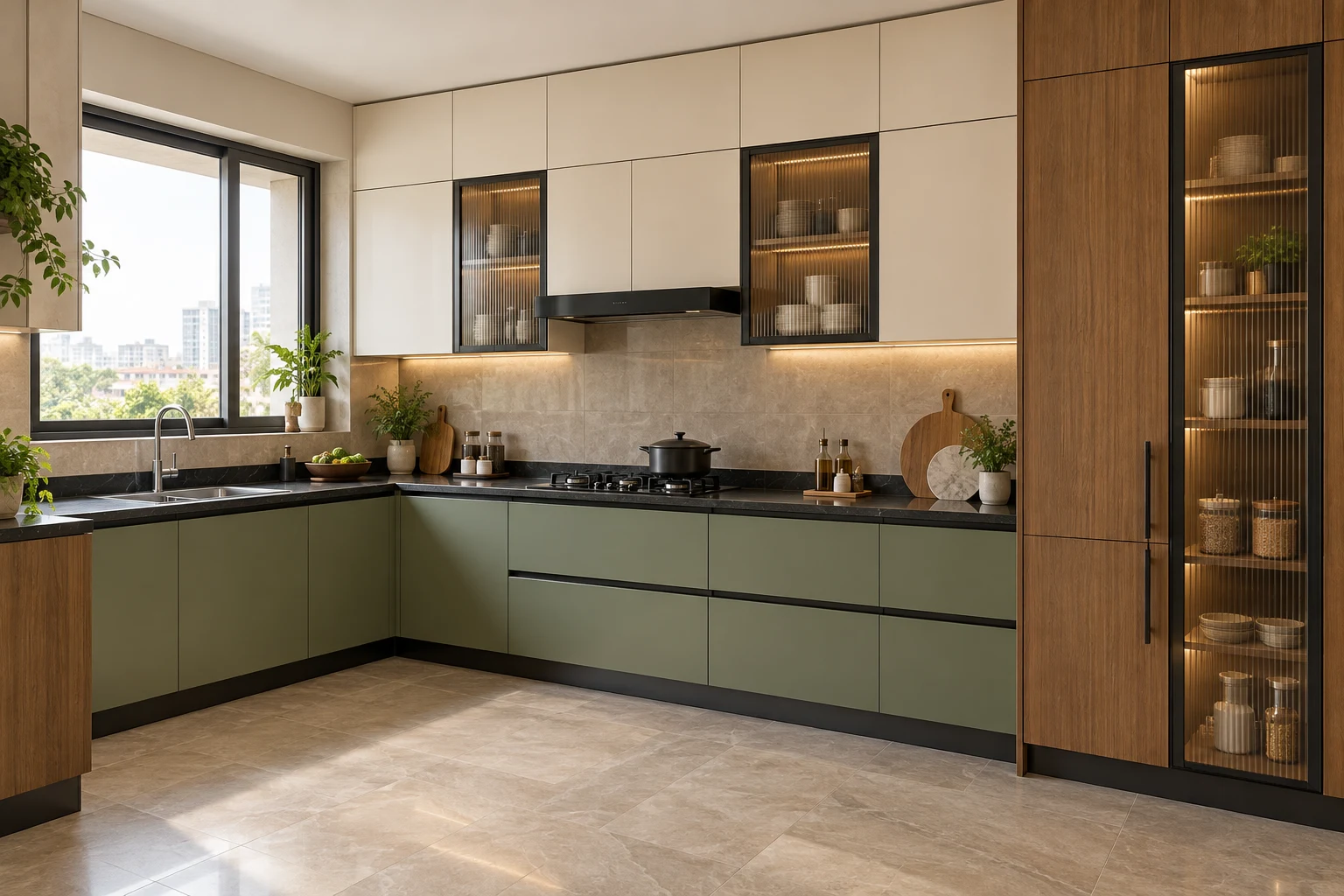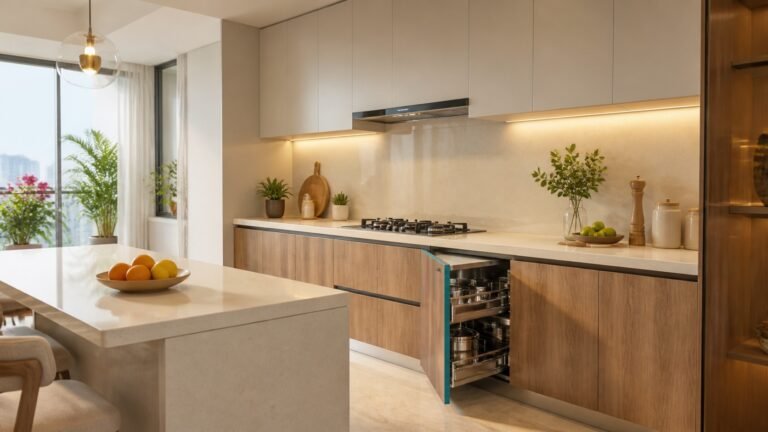
Best Material for Modular Kitchen in Hyderabad 2026
Plywood vs HDHMR vs MDF vs WPC vs aluminium vs stainless steel—compared on water, termites, strength, finish, maintenance and long-term value.
Choosing the best material for a modular kitchen in Hyderabad is more important than choosing the shutter colour. The cabinet body sits behind the finish and must handle sink leaks, steam, heat, heavy utensils, cleaning chemicals and long periods of daily use.
There is no single winner for every home because the best material for modular kitchen planning depends on the site and priorities. For maximum termite and moisture peace of mind, aluminium is a strong all-round metal option. GI/galvanized steel offers a robust factory-built middle path, while properly specified SS304 stainless steel is the premium durability benchmark. Plywood, HDHMR, MDF and WPC are included here only so homeowners can compare the alternatives honestly.
This guide compares the six materials honestly, then shows which one fits an apartment, villa, rental, wet sink zone or long-term family kitchen. If you are still deciding the layout, first see our overview of modular kitchens in Hyderabad.
Kitchen cabinet materials compared at a glance
When comparing the best material for modular kitchen cabinets, use this as a shortlist—not a substitute for checking the exact grade, thickness, joinery and warranty in your quotation.
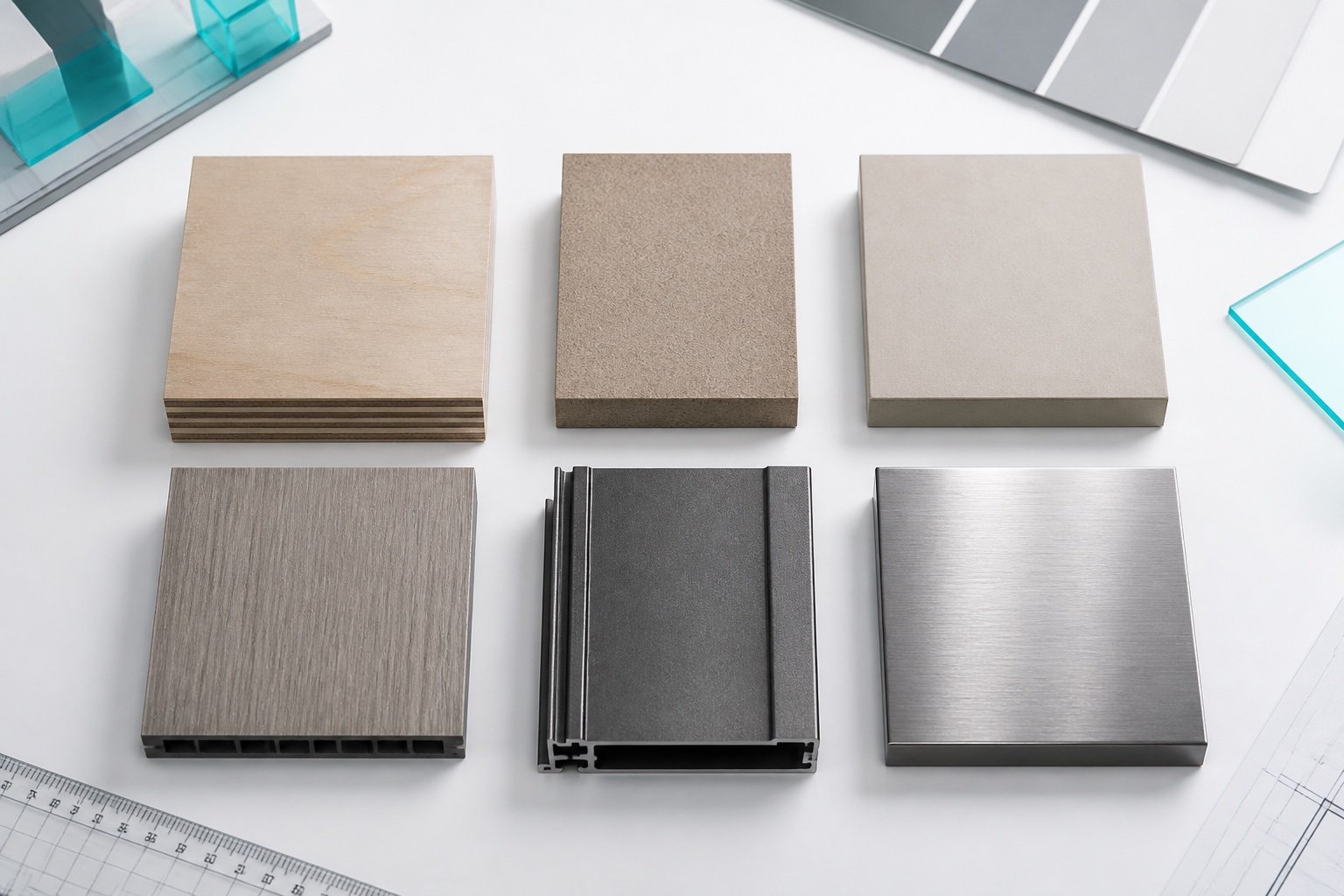
| Material | Moisture response | Termite risk | Strength & hardware | Maintenance | Relative budget* | Best suited to |
|---|---|---|---|---|---|---|
| BWP plywood | Good when genuine grade, edges and sink zones are sealed; not leak-proof | Possible because it is wood-based; treatment matters | Strong screw holding and familiar carpentry | Inspect leaks and edge damage | ₹₹–₹₹₹ | Conventional kitchens, wood-look finishes |
| HDHMR | More moisture-resistant than standard MDF; not waterproof | Depends on product formulation and certification | Dense, smooth and machinable; heavy panels need suitable hardware | Keep cut edges protected | ₹₹ | Painted or routed shutters, selected dry cabinetry |
| MDF | Vulnerable to prolonged water exposure unless properly specified and sealed | Wood-fibre core remains a consideration | Very smooth for paint and routing; weaker at wet/damaged edges | Promptly address swelling or chipped finish | ₹ | Budget shutters and dry, decorative areas |
| WPC | High water resistance in solid, good-density boards | Generally termite-resistant | Varies substantially by density and brand; confirm screw-holding | Easy wipe-down; quality selection is critical | ₹₹–₹₹₹ | Wet-prone zones and selective applications |
| GI / galvanized steel | Zinc coating improves corrosion protection; cut edges and fabrication quality matter | No food source | Strong, stable and well suited to factory-made modules | Low; protect coating from deep damage | ₹₹–₹₹₹ | Value-focused metal kitchens, full-home cabinetry |
| Aluminium | Non-absorbent cabinet structure; corrosion performance depends on alloy and finish | No food source | Lightweight and stable when engineered as a system | Low; wipe and check hardware | ₹₹₹ | Termite-prone homes, apartments, long-term low upkeep |
| SS304 stainless steel | Excellent corrosion resistance for residential kitchens when genuine SS304 is used | No food source | High structural durability; precision fabrication required | Low; fingerprints and fine scratches are cosmetic considerations | ₹₹₹–₹₹₹ | Premium family kitchens, wet zones, intensive cooking |
*Relative budget is directional. Final cost changes with layout, cabinet area, shutters, hardware, accessories, countertop, appliances, finish and installation scope. Compare like-for-like BOQs.
Best material for modular kitchen cabinets: six options explained
BWP plywood
Plywood is built from cross-laminated wood veneers, which gives good strength and screw holding. For buyers seeking the best material for modular kitchen projects on a conventional budget, the meaningful distinction is not simply “plywood”; ask for the grade, manufacturer, thickness and invoice. BWP-grade plywood is preferable around kitchens, but every cut edge and service opening still needs sealing.
- Choose it for: familiar carpentry, broad finish choice and easy local repair.
- Watch for: vague “waterproof ply” claims, unsealed sink cut-outs and mixed grades hidden within the same project.
HDHMR board
High-density, high-moisture-resistant board is denser and generally handles humid conditions better than standard MDF. Its smooth face and machining quality make it popular for routed shutters. “Moisture-resistant” does not mean it can sit in pooled water indefinitely; exposed edges and hardware points remain important.
- Choose it for: painted or routed shutters and carefully planned dry cabinets.
- Watch for: using the name HDHMR as a blanket specification without brand, thickness or zone details.
MDF
MDF has a fine, uniform surface that accepts paint and routing well. It can be cost-effective for shutters in low-risk locations. In a sink base or leak-prone cabinet, prolonged moisture can cause swelling that is difficult to reverse, so it is rarely the best material for modular kitchen wet zones. Moisture-resistant MDF is better than ordinary MDF, but detailing still decides performance.
- Choose it for: economical painted shutters or decorative panels away from water.
- Watch for: standard MDF used as a universal kitchen carcass to reduce the quote.
WPC board
Wood-plastic composite boards can resist water and termite attack, making them attractive for wet zones. However, WPC is a category, not one consistent product. Density, formulation, screw-holding, heat behaviour and surface bonding differ across manufacturers. Ask to see the exact sample and technical sheet.
- Choose it for: selected wet-prone zones where a verified board suits the joinery.
- Watch for: low-density boards, unsupported spans and generic “100% waterproof” sales language without specifications.
GI / galvanized steel
GI uses a zinc-coated steel base to improve corrosion protection while retaining the strength and stability of steel. It can provide a durable, value-focused metal cabinet system when bends, joints, cut edges and the final surface finish are handled correctly.
- Choose it for: robust factory-made kitchens and coordinated full-home metal cabinetry.
- Watch for: damaged coating, exposed cut edges, vague thickness specifications and poor fabrication.
Aluminium
An aluminium cabinet structure does not absorb water and provides no cellulose for termites. It is lightweight, dimensionally stable and compatible with many contemporary shutter finishes. For many termite-conscious owners, it becomes the best material for modular kitchen planning at a mid-premium position. Results still depend on the aluminium alloy, profile system, panel construction, connectors, coating and fabricator.
- Choose it for: low-upkeep homes, termite-prone properties and owners planning to stay long-term.
- Watch for: thin sections, rattling panels, poor edge detailing and an unspecified finish.
SS304 stainless steel
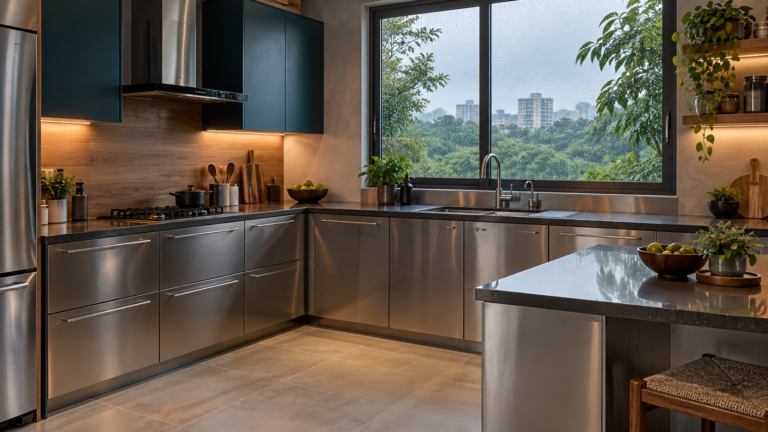
Genuine SS304 is valued for corrosion resistance, strength and a cleanable, non-porous surface. It is often the best material for modular kitchen buyers who prioritise long service life. Modern SS kitchens do not need to look commercial: the metal carcass can sit behind acrylic, glass, PU or warm neutral shutters. Precision folds, reinforced panels and good hardware are essential for a refined residential result.
- Choose it for: heavy Indian cooking, sink zones, premium homes and maximum service life.
- Watch for: an unspecified steel grade, over-polished reflective surfaces, weak internal reinforcement or confusing SS202 with SS304.
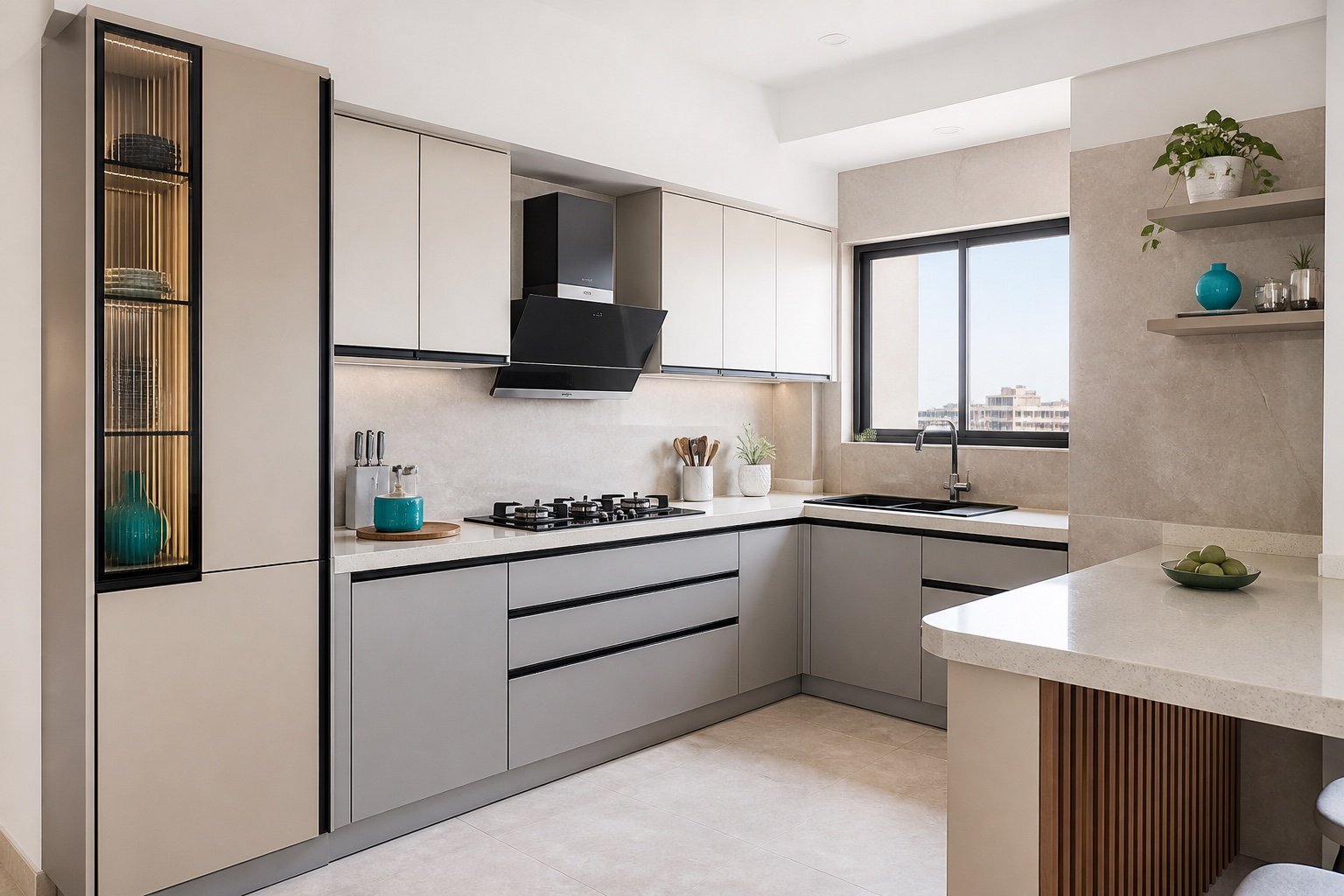
Why aluminium works well in Hyderabad apartments
For owners who want a balance of lower structural weight, water tolerance and termite peace of mind, aluminium is often the practical metal choice. It suits compact apartments, utility areas and full family kitchens when the frame, panels and hardware are engineered together.
The body can be finished in matte, gloss, stone-look, acrylic, glass or warm wood-look directions. Explore configurations and planning details on our aluminium modular kitchen Hyderabad page.
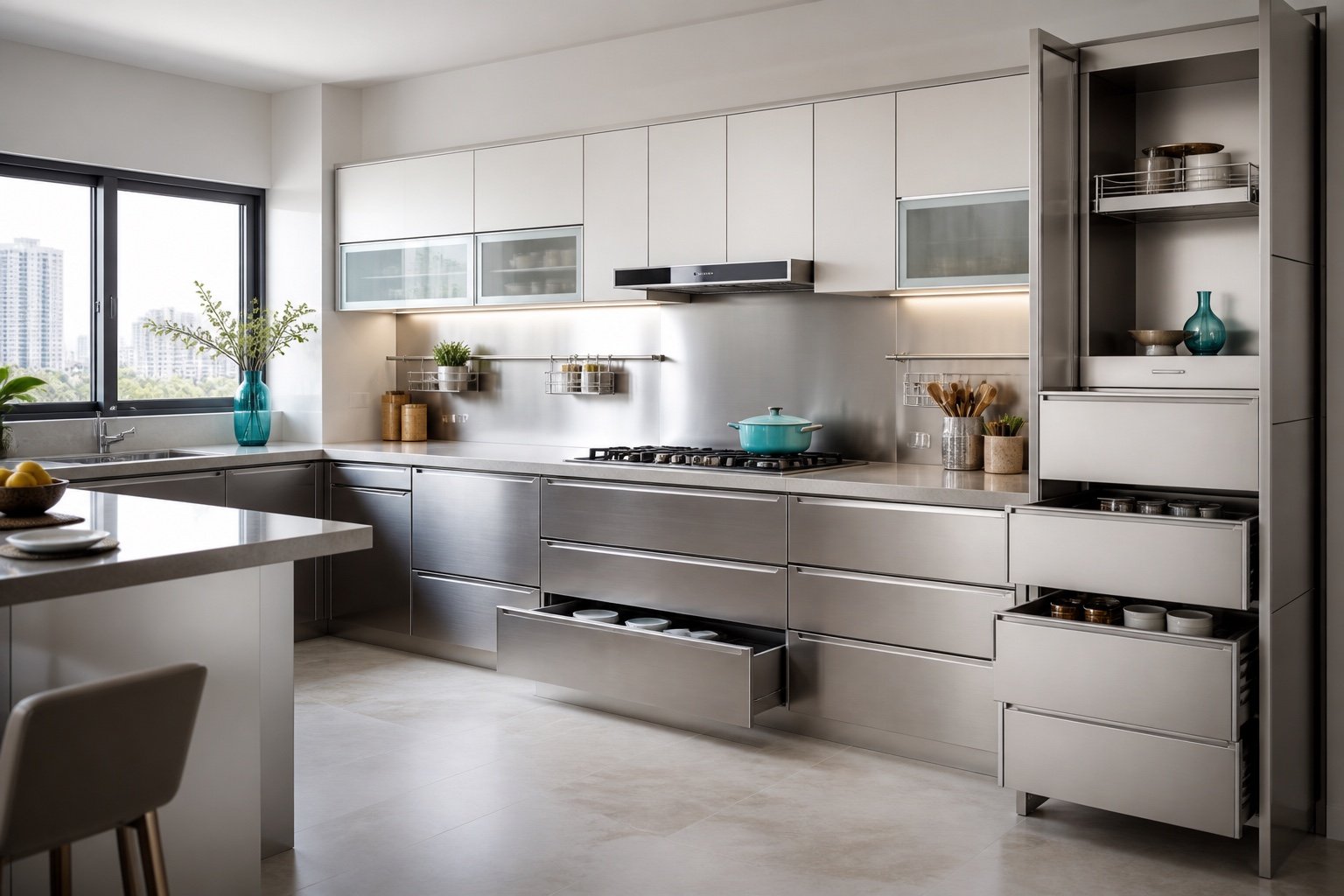
When stainless steel is worth the premium
SS304 becomes compelling when the kitchen will see frequent frying, steaming, wet cleaning, heavy cookware and long daily use. The material itself is only one part of quality: verify the grade, panel thickness, reinforcement, bends, welds or fasteners, drawer system and shutter construction.
A carefully designed residential SS kitchen can feel warm and minimal while keeping the durable metal body behind the visible finish. See material details and style options for a stainless steel modular kitchen in Hyderabad, or read our focused stainless steel vs aluminium comparison.
Five Hyderabad factors that should change your material choice
The best material for modular kitchen projects in Hyderabad should be selected against the actual site, not a generic showroom display.
1. Your exact water-risk zones
Most failures begin around the sink, dishwasher, purifier, wet utility or a concealed plumbing line. You can specify a more resilient body for these zones even if another material is used elsewhere.
2. Termite history in the building
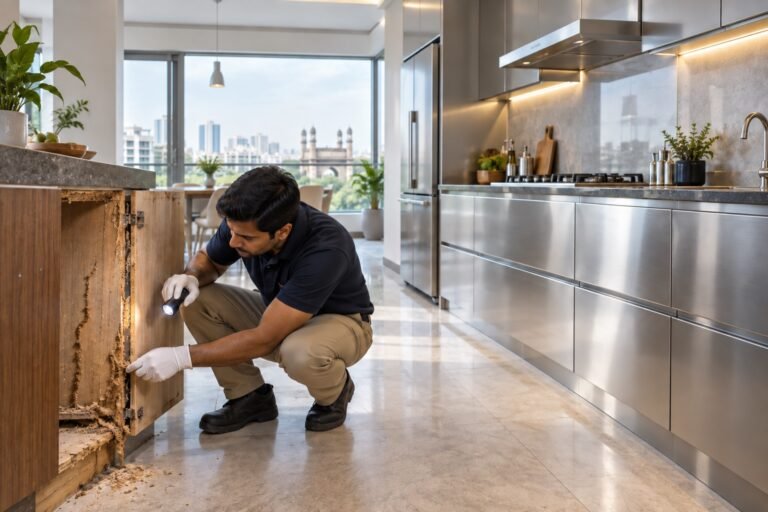
Ask your society, neighbours or previous owner about treatment and recurrence. Metal bodies contain no wood fibre; wood-based cabinets rely on treatment, prevention and prompt leak control.
3. Apartment access and serviceability
Lift size, stair access, wall alignment and future appliance replacement affect module dimensions. A good design allows service access without dismantling half the kitchen.
4. Indian cooking intensity
High heat, oil and steam increase cleaning needs. Prioritise a non-absorbent, easily wipeable internal surface near the hob and ensure chimney capacity and ducting are planned correctly.
5. Planned ownership period
For a short-term rental, prioritise sensible upfront cost and replaceable shutters. For a long-term home, the cabinet body, hardware and installation quality deserve more of the budget.
6. Factory and after-sales access
A local manufacturing and service team can measure accurately, show material samples and resolve alignment or hardware issues faster than an anonymous multi-layer supply chain.
Compare aluminium, GI and stainless steel for your kitchen
Share your layout, location, cooking needs and budget range. Metal & More will recommend the right option from our aluminium, GI/galvanized steel and SS304 systems, explain the BOQ and prepare a free 3D design direction before manufacturing.
Which is the best material for modular kitchen cabinets in your home?
Choose GI when…
You want strong, factory-made metal cabinetry with a protective zinc coating and a value-focused position between conventional boards and premium SS304.
Choose aluminium when…
You want a termite-proof, non-absorbent cabinet structure with low upkeep, relatively light modules and flexible residential finishes.
Choose SS304 when…
You value maximum durability, a hygienic cleanable body and long service life enough to justify a higher initial investment.
Why the wood-based options are still shown: plywood, HDHMR, MDF and WPC remain common comparison points in Hyderabad quotations. Metal & More does not manufacture those kitchen systems; our recommendation and estimate will cover only aluminium, GI/galvanized steel or stainless steel.
Modular kitchen quotation checklist
Even the best material for modular kitchen cabinets can underperform when the grade, hardware or installation is weak. Two quotes can look similar while hiding major differences, so ask every vendor to provide these items in writing:
Material identity
Brand, grade, thickness, finish and the exact cabinet locations where each material will be used.
Hardware schedule
Hinge, channel, drawer and lift-up brands, models, load ratings and soft-close coverage.
Complete scope
Carcass, shutters, countertop, backsplash, sink, baskets, electrical, plumbing, appliances, delivery, tax and debris removal.
Warranty & service
Separate coverage for structure, finish, hardware and installation, plus the response process after handover.
Also ask for a measured drawing, finish sample and installation sequence. Our modular kitchen installation timeline explains what should happen from site measurement to handover. Planning more than the kitchen? Compare a coordinated scope on our full-home interiors Hyderabad page.
Modular kitchen material FAQs
Which is the best material for modular kitchen cabinets in Hyderabad?
Among Metal & More’s systems, aluminium is the lightweight, low-maintenance all-rounder; GI/galvanized steel is the robust value-focused metal option; and genuine SS304 is the premium choice for maximum durability, wet-zone performance and cleanability. The right answer depends on budget, cooking intensity and design.
Does Metal & More make plywood, HDHMR, MDF or WPC kitchens?
No. These materials are included only for an honest market comparison. Metal & More manufactures modular kitchens in aluminium, GI/galvanized steel and stainless steel.
Is HDHMR better than plywood for a kitchen?
HDHMR offers a smooth, dense surface and improved moisture resistance compared with standard MDF, making it useful for routed shutters. Quality BWP plywood generally offers familiar screw holding and is often preferred for cabinet boxes. Neither name alone guarantees quality; compare the exact grade, thickness, edge sealing and intended zone.
Can MDF be used for kitchen cabinets?
MDF can work for painted or routed shutters in dry, well-sealed areas. Standard MDF is not the preferred choice for sink bases or locations with recurring water exposure because prolonged moisture can cause swelling. If it is specified, confirm the grade, edge treatment and warranty.
Is WPC completely waterproof and termite-proof?
Good-quality solid WPC is highly resistant to water and termite damage, but performance varies with formulation and density. Confirm the technical data, screw-holding suitability, allowable spans, surface bonding and warranty instead of relying only on a generic “WPC” label.
Does an aluminium modular kitchen rust?
Aluminium does not rust in the same way as iron, but it can corrode under unsuitable conditions. Alloy choice, powder coating or anodising, connectors, fabrication and cleaning practices all matter. Ask the manufacturer to specify the system and finish.
Is stainless steel too industrial-looking for a home kitchen?
No. The durable SS304 cabinet body can sit behind acrylic, glass, PU, stone-look or warm neutral shutters. You can expose brushed steel selectively or conceal it almost completely, depending on the visual direction.
Is SS304 better than aluminium for a modular kitchen?
SS304 is generally stronger and is the premium choice for intensive use and wet zones. Aluminium is lighter and can offer excellent low-maintenance performance at a different cost and design point. The better option depends on budget, module design and how the kitchen will be used.
How should I compare modular kitchen prices in Hyderabad?
Compare itemised BOQs with the same layout, module count, material grade, thickness, shutters, hardware, accessories, countertop, taxes, delivery and installation. A low per-square-foot number is not meaningful if key components are excluded.