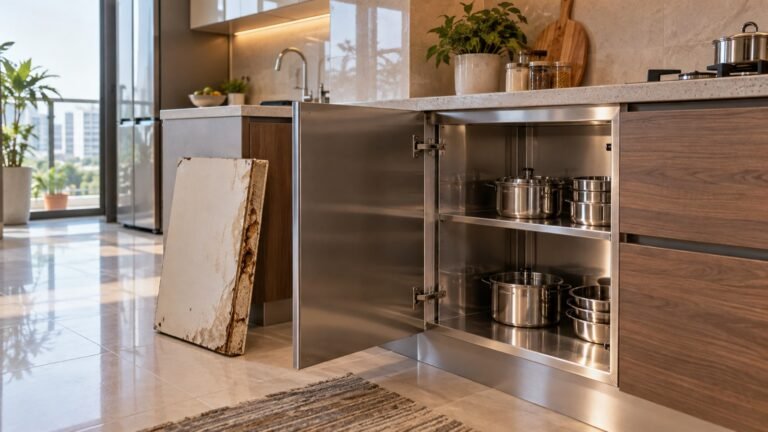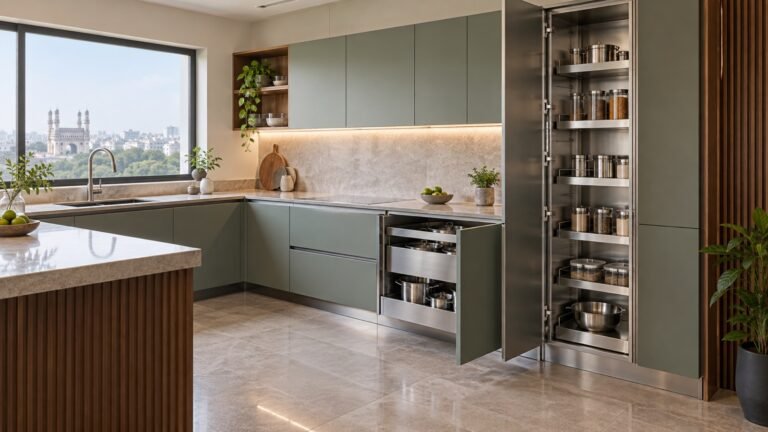
Do steel kitchen cabinets rust?
The honest answer depends on the steel grade, coating, fabrication, cleaning chemicals and environment. Here is how to choose genuinely rust-resistant kitchen cabinets.
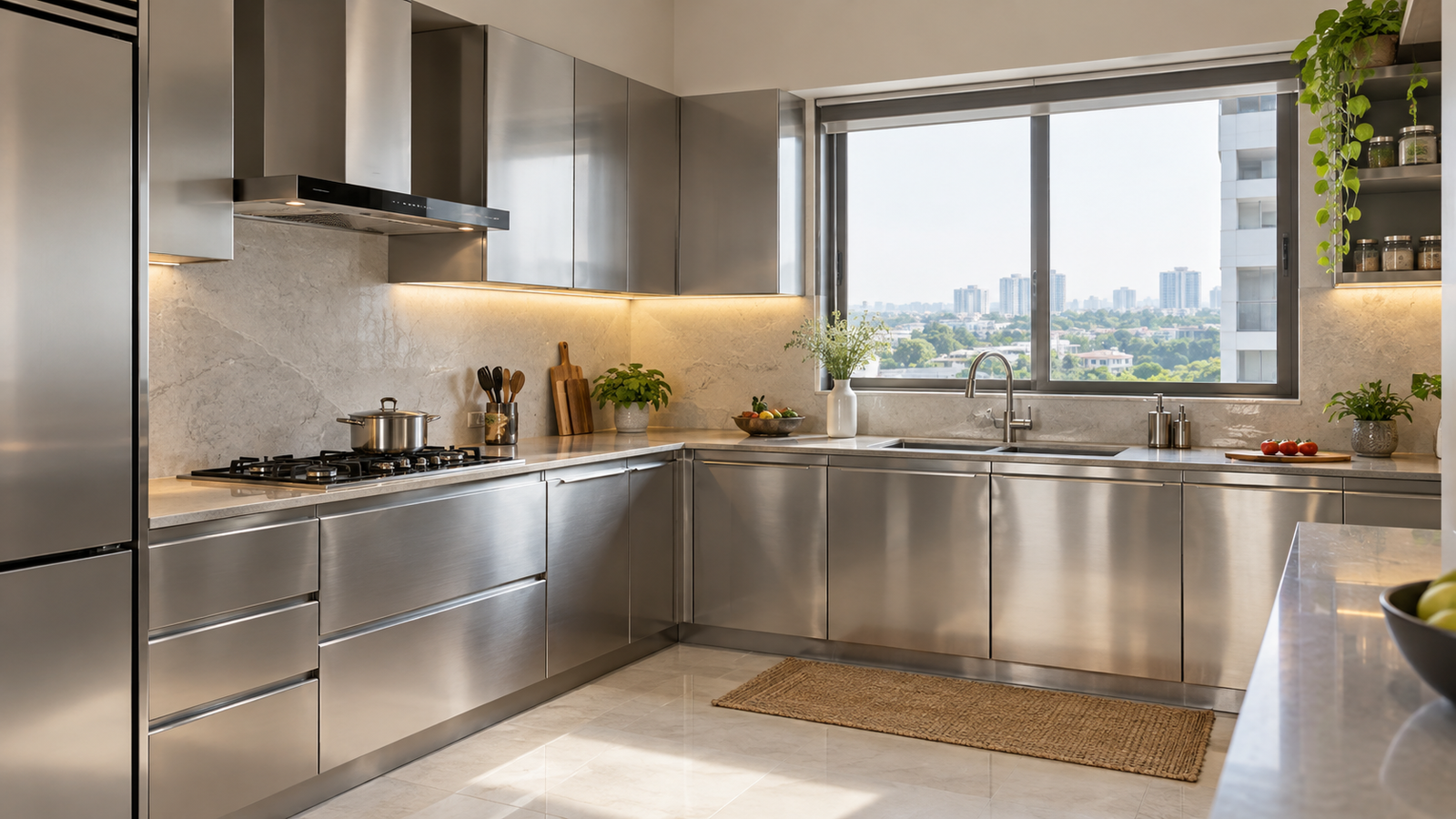
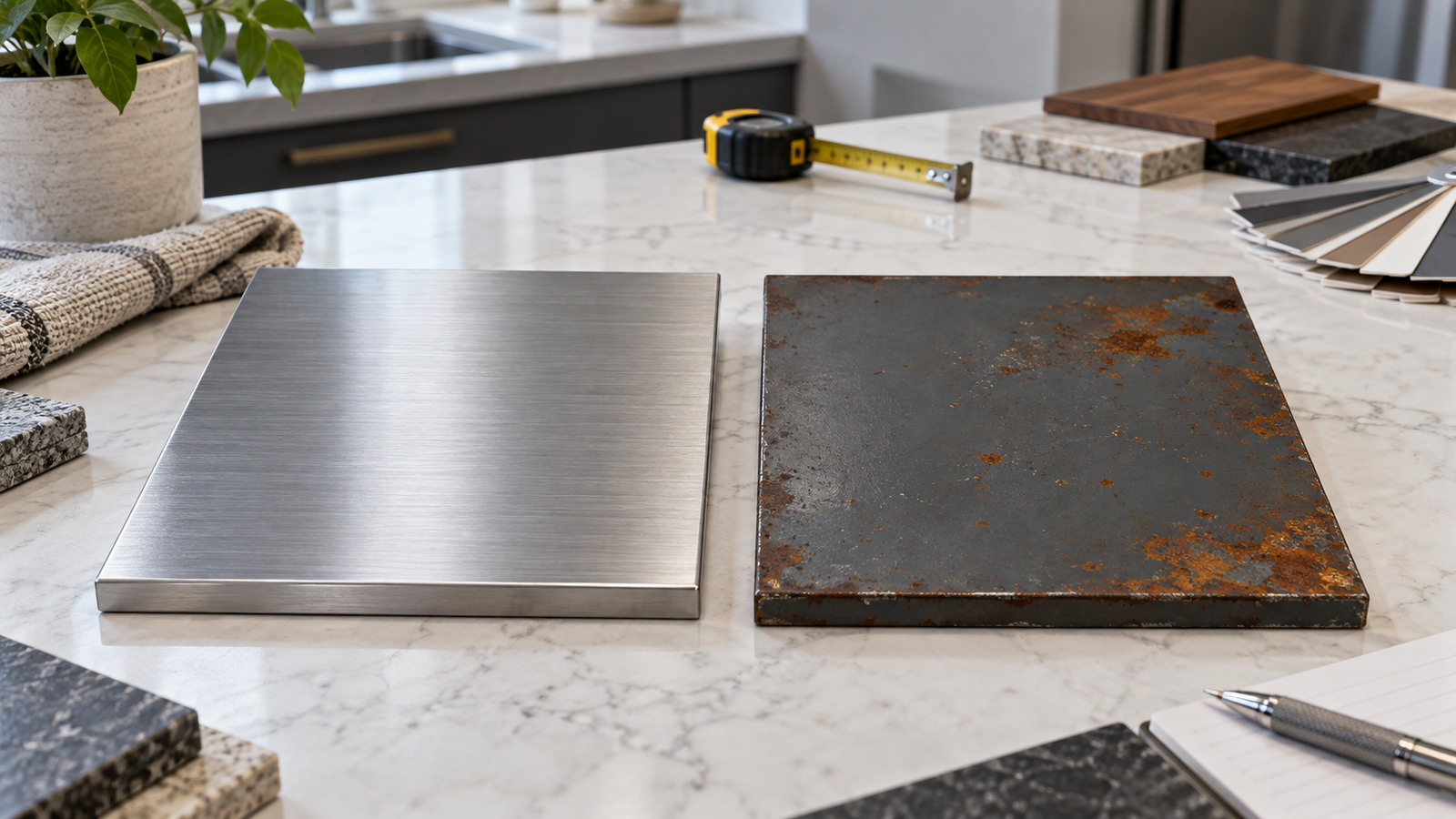
Do steel kitchen cabinets rust? Some can. Ordinary mild steel can rust when moisture and oxygen reach the metal, especially after a coating is scratched or poorly applied. Properly specified SS304 stainless-steel kitchen cabinets offer much stronger corrosion resistance for normal residential interiors because chromium in the alloy forms a thin, self-renewing passive layer. That does not make every stainless surface invincible: chloride-heavy cleaners, iron contamination, harsh environments and bad fabrication can still create staining or local corrosion.
Do steel kitchen cabinets rust in normal home use?
The word “steel” covers several materials. Mild steel contains iron and readily forms rust if its protective paint or powder coating is breached. Galvanised steel uses a zinc layer that protects the underlying metal, but cut edges, scratches and aggressive environments influence its life. Stainless steel contains enough chromium to create a passive oxide film. Grades with nickel and molybdenum offer different levels of corrosion resistance. Therefore, a promise that “steel never rusts” is too broad; the grade and system must be named.
In a normal indoor Hyderabad kitchen, genuine SS304 that is properly fabricated and cleaned should resist everyday water and cooking conditions very well. Occasional brown marks on stainless are not always base-metal rust. They can be deposits from iron particles, contaminated tools, hard-water residue or airborne material. Correct diagnosis matters because surface contamination can often be cleaned, whereas deep pitting points to a more serious chemical or grade issue.
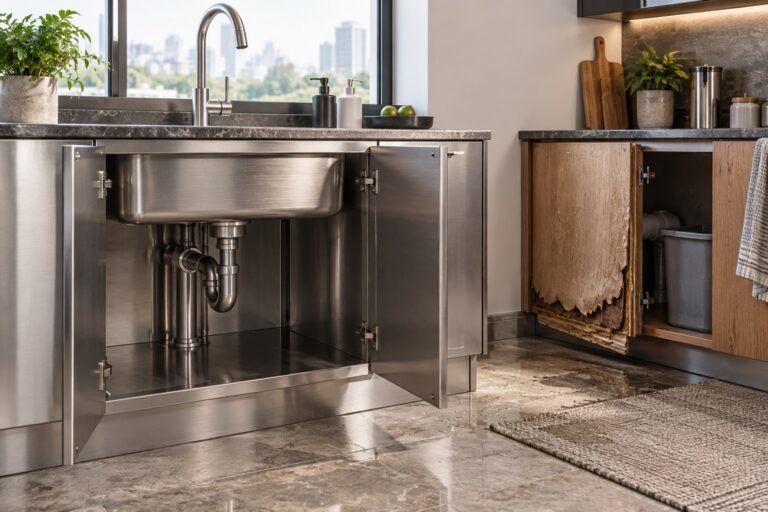
The sink area is the best stress test. It combines splash water, cleaning chemicals, metal utensils and trapped deposits. Rounded, finished edges, clean welds, drainage and accessible corners help the passive surface perform. A durable kitchen comes from material choice plus design—not from a grade number alone.
What “SS 304 corrosion resistance” really means
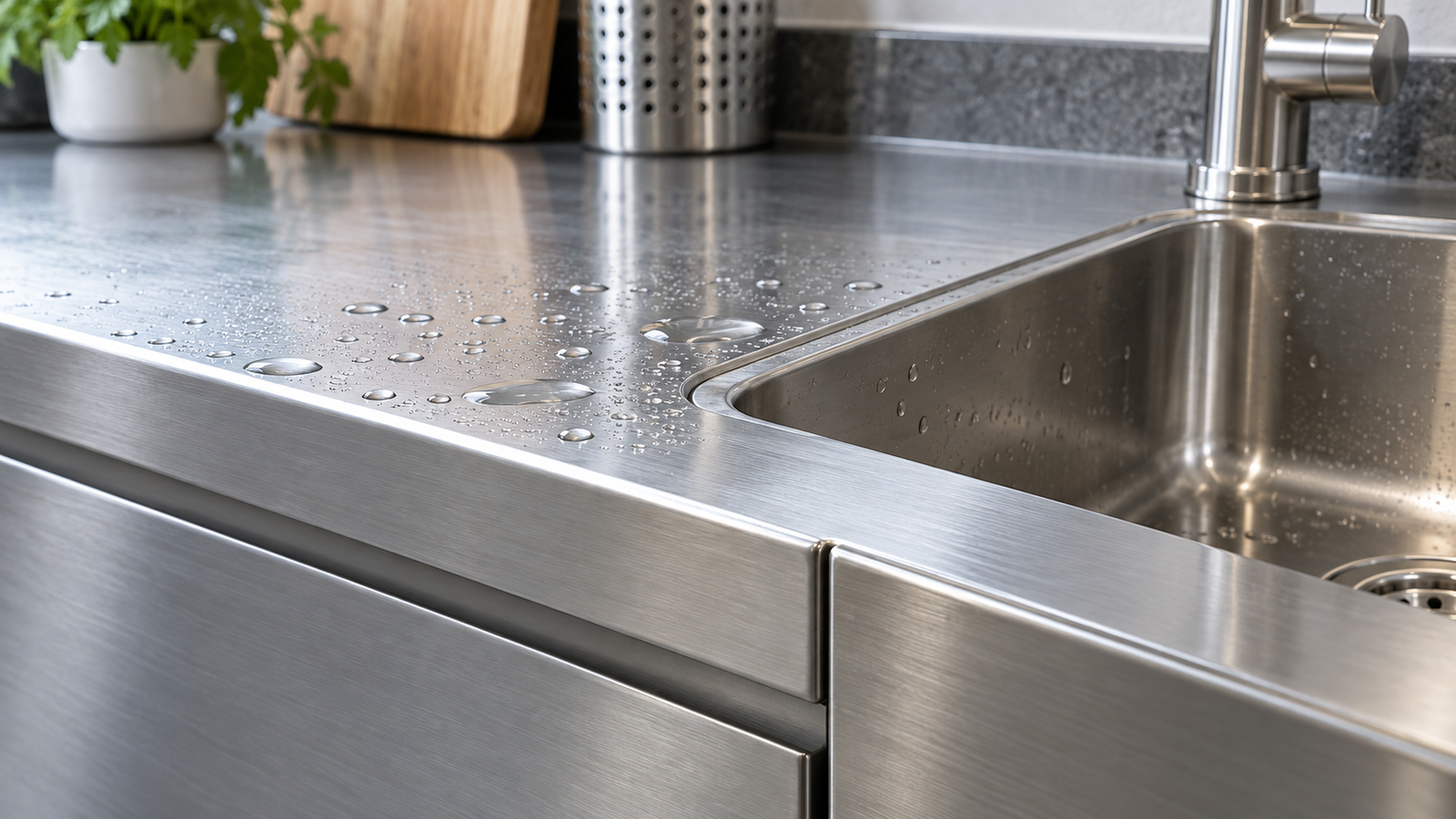
Stainless steel earns its name from chromium. When the surface is exposed to oxygen, chromium forms an extremely thin passive layer that slows further attack. If the surface receives a minor scratch and remains in a suitable oxygenated environment, this layer can reform. Nickel helps stabilise the alloy structure and supports performance. This is why SS304 is widely used for equipment and surfaces where hygiene, cleanability and corrosion resistance are important.
Passivation is not a visible coating that peels off. It is a property of the alloy surface. However, contamination and aggressive chemicals can disrupt it. Chloride ions are a well-known challenge for stainless steel and may encourage localised pitting, especially when concentrated solution sits in a crevice. Bleach, some toilet cleaners, pool chemicals and salt-rich residues should not be stored or left on a stainless cabinet.
The search phrase “SS 304 corrosion rate” can be misleading without conditions. Corrosion is not one universal annual number. Temperature, chloride concentration, acidity, oxygen, surface finish, crevices and exposure time all change performance. For a residential kitchen buyer, the practical goal is to verify genuine grade, good fabrication and compatible cleaning—not to rely on a laboratory number detached from the home environment.
SS304 vs SS202, mild steel, galvanised steel and aluminium
| Material | Rust/corrosion behaviour | Kitchen buying note |
|---|---|---|
| SS304 stainless steel | Strong corrosion resistance for many normal indoor kitchen conditions; vulnerable to misuse of chlorides and severe environments | Ask for grade documentation, thickness, finish and fabrication details. |
| SS202 stainless steel | Can offer lower corrosion resistance than SS304 in demanding moisture or chloride conditions | Do not accept “stainless” without the grade. |
| Powder-coated mild steel | Base metal can rust where pretreatment or coating is weak, cut or scratched | Inspect folds, holes, welds and concealed edges—not only flat visible faces. |
| Galvanised steel | Zinc coating protects the base; life depends on coating, fabrication and environment | Cut edges and joining method need attention. |
| Aluminium | Does not form red iron rust; it can oxidise or react in unsuitable chemical conditions | A practical lightweight, moisture-resistant option with a well-designed system. |
Price alone does not verify grade. A sample can look bright and metallic regardless of alloy. Ask the manufacturer to state SS304 on the quotation and invoice, identify which parts use it and explain how grade is checked. The Bureau of Indian Standards provides information on Indian standards and conformity, while established steel producers publish grade data that can help buyers ask better questions.
If you are comparing whole cabinet systems, see our steel vs wood vs aluminium kitchen guide. Homeowners deciding between the two metal routes can also explore our aluminium modular kitchen solutions.
9 reasons a steel kitchen may show rust or staining
1. Wrong or undisclosed grade
A generic “stainless-steel kitchen” quotation may hide inconsistent grades across carcasses, shutters, fasteners and accessories.
2. Chloride cleaners
Bleach and some aggressive cleaners can attack the passive layer, especially when they remain in corners or crevices.
3. Iron contamination
Grinding dust, steel wool or tools previously used on carbon steel can deposit particles that later create brown marks.
4. Poor weld finishing
Heat tint, rough welds and inadequate cleaning can leave local sites less resistant than the surrounding surface.
5. Crevices and trapped water
Tight overlaps and dirty joints restrict oxygen, concentrate residue and make cleaning difficult.
6. Damaged coating
On mild or galvanised steel systems, scratches and poorly protected cut edges can expose the base metal.
7. Dissimilar-metal contact
Mixed metals in the presence of moisture can set up galvanic conditions. Fastener and accessory compatibility matter.
8. Persistent salt or acid residue
Pickle brine, salt, acidic food and chemical products should not sit on a metal surface for long periods.
9. Coastal or industrial exposure
Airborne chlorides and pollutants can demand a different grade, finish or maintenance schedule from an inland apartment.
A single mark is evidence to investigate, not proof that every cabinet is failing. Note its location, colour, texture and whether it returns after proper cleaning. Marks around screws may point to incompatible fasteners; lines below a joint can indicate trapped solution; general tea staining may relate to deposits and cleaning frequency.
How coatings and fabrication affect rust resistance
Powder coating can deliver an attractive, durable finish on correctly prepared metal. Performance starts before colour is applied: the surface must be cleaned and pretreated so the coating bonds consistently. Film thickness, curing, folding, welding and edge coverage all influence protection. A perfect showroom face means little if concealed folds or drilled holes are poorly covered.
With stainless steel, surface finish and fabrication cleanliness matter. A smoother, consistently finished surface is generally easier to clean than a rough one that traps residue. Welding should be appropriate for the grade; heat tint and contamination should be removed using controlled processes. Separate tools for stainless help prevent iron transfer. Finished edges should be safe to touch and accessible joints should not hold water.
Fasteners, hinges, baskets and handles deserve the same attention. A premium SS304 carcass paired with incompatible or low-quality fittings can still show local staining and deliver a disappointing ownership experience. Ask which components are stainless, which are coated, and how damaged parts can be replaced. Review the advantages and limitations in our detailed guide to stainless-steel kitchen cabinet pros and cons.
Steel kitchen maintenance: the safe cleaning routine
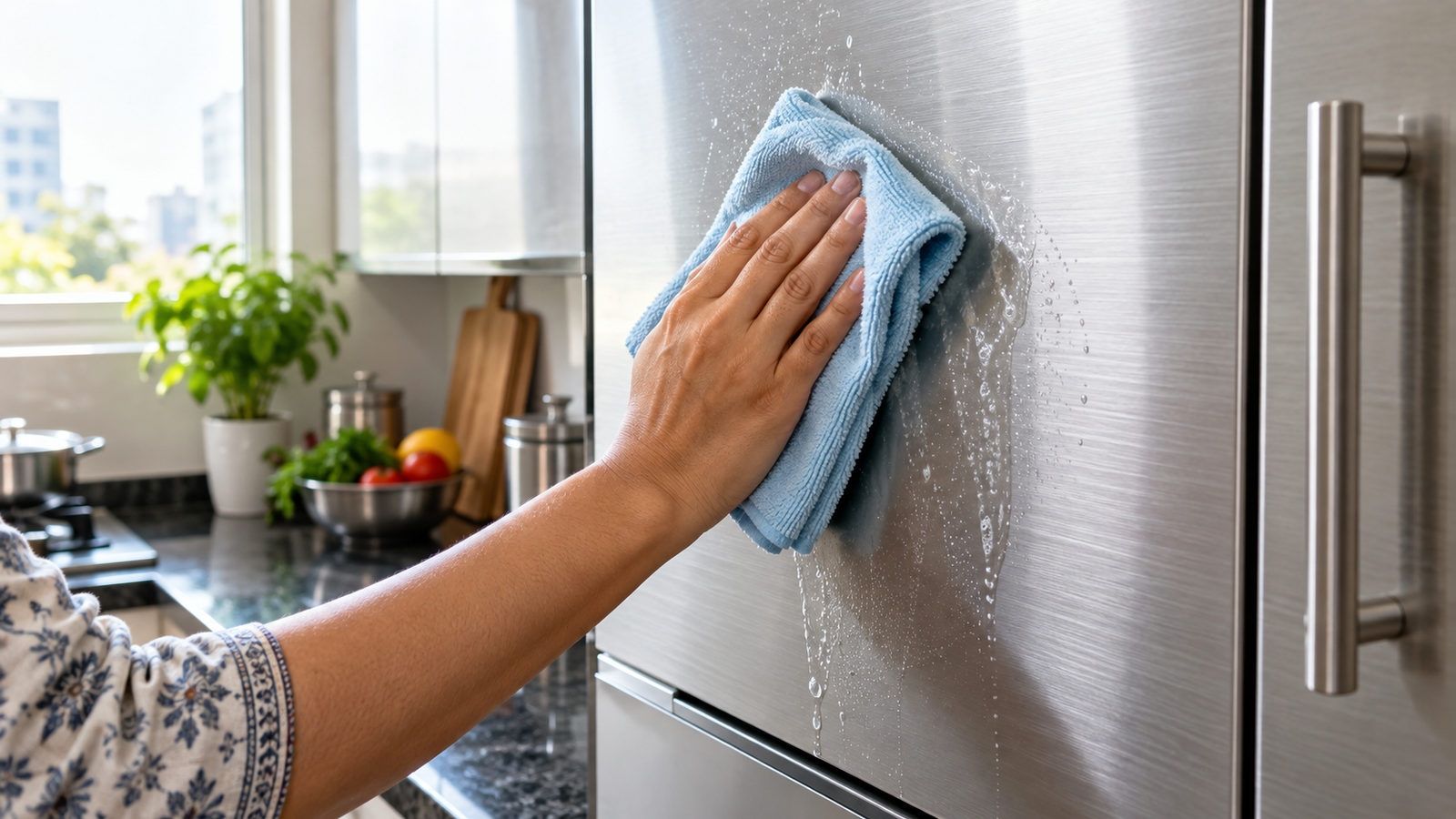
- Remove loose dust. Use a clean, soft cloth so grit is not dragged across the finish.
- Wash gently. Use warm water with a small amount of mild dish soap for routine grease and fingerprints.
- Follow the grain. On brushed stainless, wipe along the visible grain rather than across it.
- Rinse residue. A separate damp cloth removes soap and loosened contamination.
- Dry the surface. A clean microfiber cloth reduces water spots and prevents solution from sitting in joints.
- Inspect wet zones. Check sink edges, plumbing, fasteners and lower corners for trapped water or chemical bottles.
- Correct the cause. If a mark returns, identify contamination, leakage or chemical exposure instead of polishing repeatedly.
Avoid steel wool, harsh abrasive powder and random acid or bleach treatments. Do not mix cleaning chemicals. If the manufacturer recommends a proprietary product, test it on an inconspicuous area and follow the written instructions. Coated metal may need a different product from bare stainless, so one cleaner is not automatically suitable for every panel.
Daily maintenance should be light. Stainless does not need constant polishing to remain hygienic. Removing food, grease, salts and cleaning residue is more important than creating a mirror shine. For broader kitchen hygiene practices, the Food Safety and Standards Authority of India offers public food-safety information, though your cabinet manufacturer’s care instructions remain the guide for the finish.
What to do if you see a rust-coloured spot
First, stop using aggressive cleaners and photograph the mark in good light. Check whether a leaking bottle, wet cloth, steel-wool fragment or nearby carbon-steel object has been in contact with the surface. Clean the area with mild soapy water, rinse and dry. If the manufacturer supplies an approved stainless cleaner, follow its directions on a test area. Do not immediately sand the mark; uncontrolled abrasion can alter the finish and complicate a warranty claim.
If staining remains, contact the installer with the location, date, photographs and care products used. Ask for a grade and fabrication review. A removable surface deposit may need professional cleaning and repassivation; a pit, blistered coating or spreading rust line may require component replacement and correction of the root cause. Painting over corrosion without preparation usually hides the symptom temporarily.
For powder-coated cabinets, inspect whether damage has reached bare metal. Small manufacturer-approved touch-up may be appropriate for a local chip, but swelling, under-film rust or failure along many edges suggests a coating or preparation problem. Warranty evaluation should happen before a third party changes the surface.
Want rust-resistant kitchen cabinets, not a vague “steel” promise?
Ask Metal & More Interiors for a material-led consultation. We can compare SS304 stainless steel, aluminium and coated metal for your layout, wet zones, finish preference and budget—then provide a clear specification for your Hyderabad kitchen.
Choosing a steel kitchen for Hyderabad conditions
Hyderabad homes face different micro-environments. A dry high-rise kitchen is not the same as a poorly ventilated utility next to an exterior wall. Monsoon seepage, hard-water deposits, steam and cleaning habits can create local exposure even in an inland city. During planning, identify plumbing routes, washing-machine connections, sink splash zones and walls with past dampness.
Provide ventilation around appliances and follow their clearance requirements. Keep cabinets off regularly wet floors with a suitable leg and skirting system. Use removable sink-base trays where helpful, and leave valves accessible. Confirm that the countertop and backsplash direct water away from cabinet joints. The best material cannot compensate for a leak concealed behind an inaccessible panel.
For homeowners prioritising longevity, SS304 is often attractive because it does not swell, is not a termite food source and is easy to clean. It can also be combined with coloured shutters or other finishes so the room does not need to look like a commercial kitchen. Browse our SS304 stainless-steel modular kitchen page for residential design options, or read the stainless-steel kitchen safety guide.
12-point buying checklist for rust-resistant kitchen cabinets
- Get the exact metal grade written into the quotation and invoice.
- Confirm whether carcasses, shutters, shelves, fasteners and accessories use the same material.
- Ask how the supplier verifies SS304 and whether documentation is available.
- Record sheet thickness for each major component.
- Inspect welds, folds, cut-outs and concealed edges—not only the front face.
- Understand the surface finish and manufacturer-approved cleaning method.
- For coated steel, ask about pretreatment, coating system and repair procedure.
- Check that hinges, channels and fasteners are compatible with the cabinet system.
- Plan drainage, plumbing access, sink sealing and separation from damp walls.
- Review the warranty exclusions for chemicals, scratches and coastal exposure.
- Visit an installed kitchen that has been used for at least a year if possible.
- Compare lifecycle cost, service support and replaceable components, not only price.
A professional proposal should make these points easy to answer. If a vendor avoids naming the grade or offers only a verbal assurance, you cannot compare like for like. The cheapest quote may be using a different alloy, thickness, hardware set or finishing process. Transparent specifications protect both buyer and fabricator.
Cost should be judged over years of use. Our guide to stainless-steel kitchen cost savings over 10 years shows how maintenance and replacement cycles affect value. If you are choosing between stainless and aluminium, discuss the wet-zone conditions, desired finish, load and budget rather than assuming one metal wins every category.
Common myths about stainless-steel kitchen rust
Myth 1: A magnet proves whether steel is SS304
Magnetic response can vary with alloy structure and cold working, so a simple magnet test is not a reliable grade certificate. Use supplier documentation and appropriate verification methods rather than a social-media shortcut.
Myth 2: Stainless steel can never corrode
Stainless is corrosion-resistant, not corrosion-proof in every chemical and environment. Correct grade selection and care are part of the system.
Myth 3: Every brown mark means the cabinet is low grade
Iron contamination, hard-water residue and external particles can create rust-coloured deposits. Persistent pitting or recurring corrosion still deserves investigation.
Myth 4: Thicker steel automatically prevents rust
Thickness improves stiffness and damage tolerance, but corrosion resistance primarily depends on alloy, surface condition, design and exposure. Both must be specified.
Myth 5: Stronger cleaner gives a cleaner kitchen
Concentrated bleach, acids or abrasives can harm a surface and create a bigger problem. Mild, compatible cleaning is normally the safer routine.
Frequently asked questions
Do steel kitchen cabinets rust?
Mild or poorly protected steel can rust. Genuine SS304 offers strong corrosion resistance for most normal indoor kitchens, while coated systems depend on pretreatment and coating integrity.
Is SS304 completely rust proof?
No alloy is immune in every environment. SS304 performs very well in many residential interiors, but concentrated chlorides, contamination, crevices and poor fabrication can cause staining or local corrosion.
Is SS304 better than SS202 for kitchen cabinets?
SS304 is generally preferred where stronger corrosion resistance is important. Ask for the exact grade in writing and evaluate fabrication, hardware and finish as well.
Can stainless steel rust near a kitchen sink?
It can show staining or local corrosion if chloride cleaner, salt, iron contamination or trapped residue remains on the surface. Good grade, finished joints and routine drying reduce risk.
How should I clean SS304 kitchen cabinets?
Use warm water, mild dish soap and a clean microfiber cloth. Wipe with the grain, rinse residue and dry. Avoid steel wool and unapproved bleach or acid products.
Can rust spots on stainless steel be removed?
Surface contamination can often be cleaned with a manufacturer-approved method. Deep pitting, recurring marks or coating failure should be assessed by the installer before abrasive treatment.
Does powder-coated steel rust?
The coating protects the base metal, but scratches, poor pretreatment, thin edge coverage or failed joints can allow corrosion. Quality control and repair instructions matter.
Is aluminium better than stainless steel for a modular kitchen?
Both avoid wood swelling and termite risk. Aluminium does not form red iron rust and is lightweight; SS304 offers strength, hygiene and premium durability. The best choice depends on system design, finish, load and budget.
Build an SS304 kitchen with the specification made clear
Metal & More Interiors designs residential metal kitchens that balance corrosion resistance, cleanability, storage and modern finishes. Tell us your area, layout and preferred style to receive a practical recommendation and quotation.