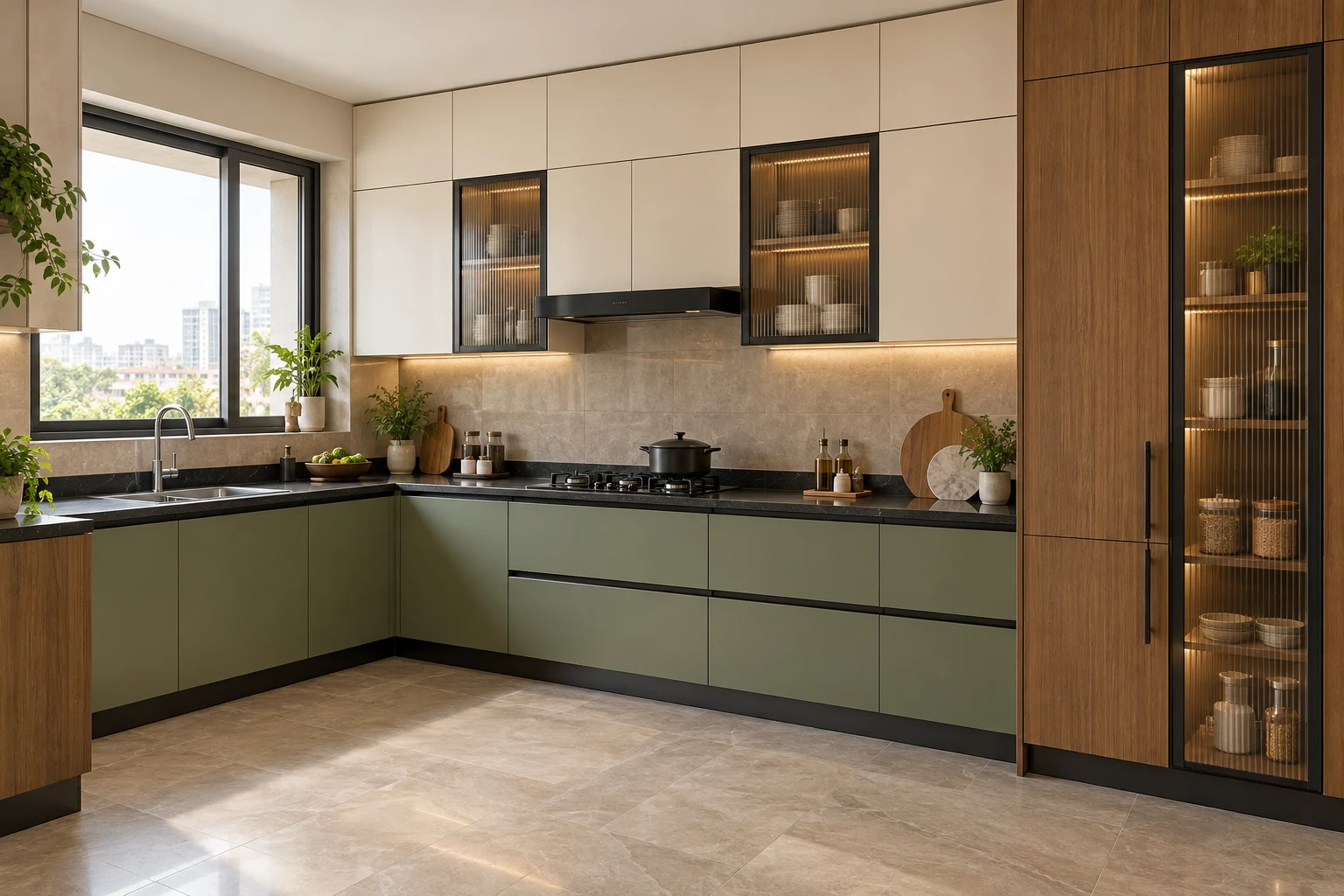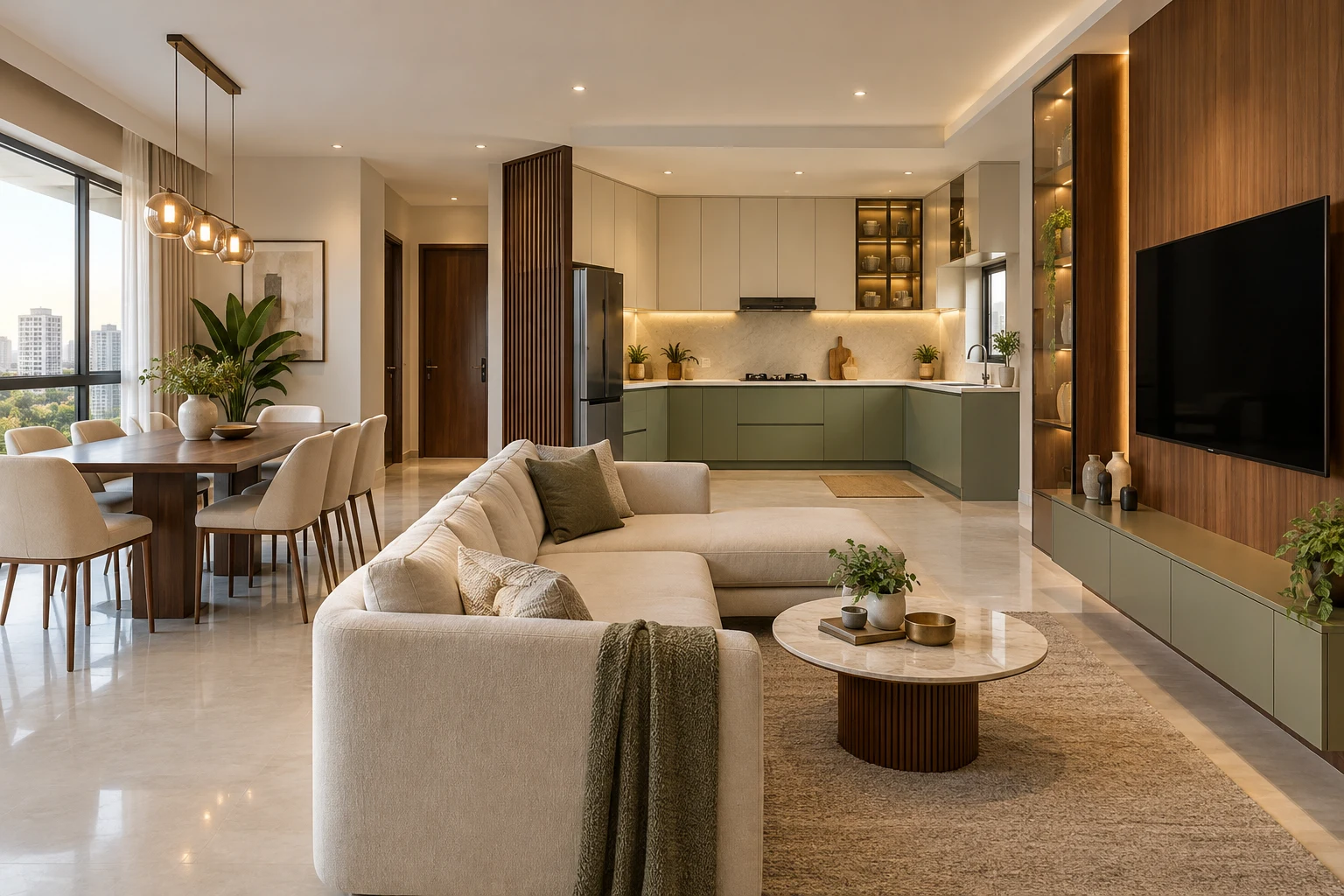

Hyderabad Kitchen Hygiene & Engineering Guide 2026
Dealing with cockroaches in modular kitchen cabinets is one of the most exhausting problems faced by homeowners across Hyderabad. Even in newly renovated apartments where countertops are wiped spotless every night, tiny brown nymphs and egg cases keep reappearing inside cutlery drawers, spice pull-outs, and under-sink compartments within weeks of professional pest control treatments.
The reason chemical sprays and herbal gels only deliver temporary relief is structural rather than behavioural. Traditional wood-based carcasses built from plywood, MDF, or particle board contain hundreds of warm, dark micro-crevices at peeling edge-band seams, swollen sink bases, and hollow back-panel voids where roaches nest undisturbed.
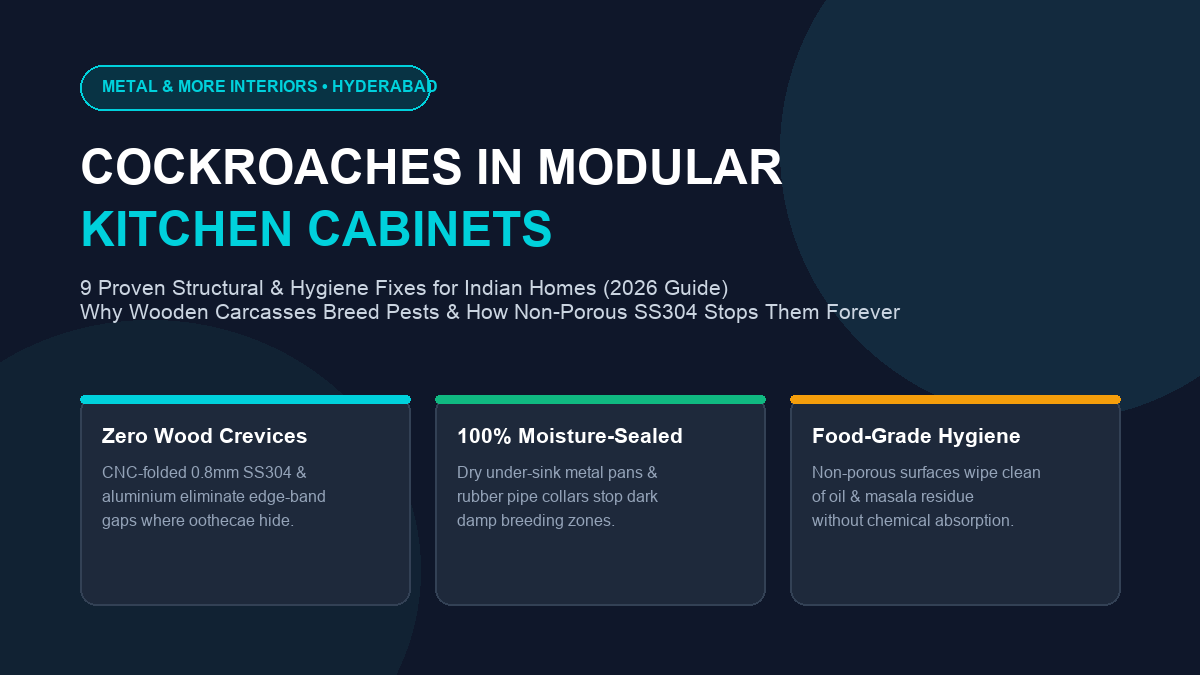
This engineering guide explains why cockroaches in modular kitchen cabinets return repeatedly in Indian cooking environments and sets out 9 proven structural and hygiene fixes. Whether you want to seal an existing wooden kitchen or upgrade to a non-porous SS304 stainless steel and aluminium system manufactured in-house by Metal & More Interiors at B.N. Reddy, Charlapally, Secunderabad, every step below addresses the root cause.
Hyderabad & Secunderabad
By Metal & More Interiors, Charlapally Factory
Quick engineering answer: To eliminate cockroaches in modular kitchen cabinets permanently, you must remove their three survival essentials: dark 1.5 mm nesting crevices in peeling wooden edge-banding, damp cellulose boards beneath the kitchen sink, and unsealed drain cut-outs. Sealing plumbing penetrations with EPDM collars solves immediate entry, while choosing non-porous CNC-folded SS304 stainless steel or aluminium cabinetry removes organic breeding grounds for life.
Why cockroaches in modular kitchen cabinets keep coming back
Two distinct insect species account for almost every residential kitchen infestation in India. The larger American cockroach (Periplaneta americana) enters through unsealed utility floor drains and plumbing cutouts, while the smaller German cockroach (Blattella germanica) lives, breeds, and completes its entire lifecycle inside kitchen cabinetry.
Unlike outdoor garden pests that forage at night and leave before dawn, German cockroaches are thigmotactic insects. That biological term means they seek tight physical contact on both sides of their bodies, preferring dark crevices measuring just 1.5 mm to 4.5 mm wide where surface sprays cannot penetrate.
According to urban vector guidance published by the World Health Organization (WHO), a single female German cockroach carries a protective egg case (ootheca) containing 30 to 40 nymphs right until hatching. Even if chemical fumigation kills roaming adults on shelf surfaces, hidden egg cases tucked inside delaminated plywood seams hatch two weeks later and restart the colony.
Indian cooking habits accelerate this breeding cycle whenever cockroaches in modular kitchen cabinets find unsealed wooden edges. Daily tempering (tadka), pressure cooking steam, and humid Hyderabad monsoons deposit microscopic oil films and moisture onto cabinet edges, softening board adhesives and turning wooden boxes into heated incubators.
Furthermore, cockroaches leave chemical aggregation pheromones in their droppings inside porous wood fibers. Those scent markers signal newly hatched nymphs and neighbouring insects from building shafts to return to the exact same hinge recess or drawer channel season after season.
Tired of recurring pest control visits in a damp wooden kitchen?
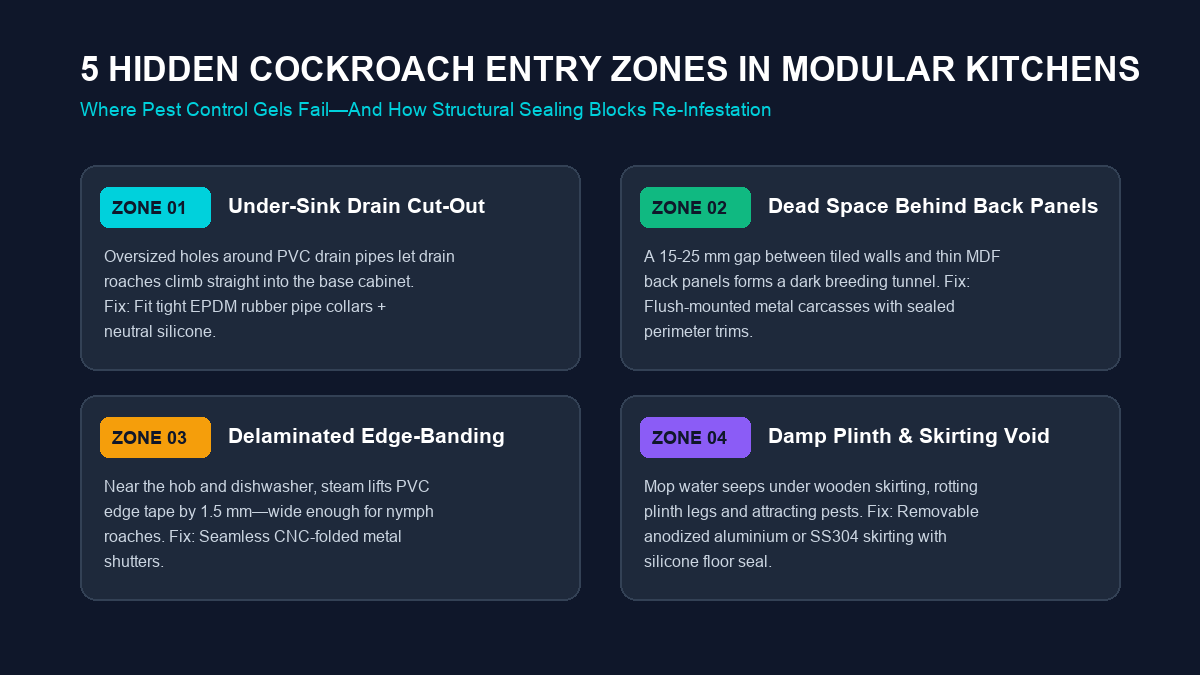
5 hidden breeding zones inside wooden modular kitchens
When homeowners inspect their shelves for cockroaches in modular kitchen cabinets, they usually check the visible inner laminate surface. In reality, roaches rarely nest on open shelves; they colonize five concealed structural voids built into standard carpentry kitchens.
1. Peeling PVC edge-banding tape around shutters and shelves
Every plywood, MDF, or HDHMR panel has raw cut edges covered with 0.8 mm or 2 mm PVC edge-banding tape bonded using hot-melt EVA glue. Above the hob, beside the dishwasher, and near the sink, cooking heat and steam soften that adhesive within 18 to 30 months.
Once the PVC tape lifts by even 1 mm, it forms a warm, grease-coated pocket along the cabinet edge. Nymph cockroaches slip behind the lifted tape, feed on the starch-rich adhesive residue, and deposit egg cases where no cleaning cloth can ever reach.
2. The 20 mm dead void behind thin MDF back panels
Standard wooden modular boxes use a thin 4 mm or 6 mm MDF back sheet grooved into the carcass sides, leaving a 15 mm to 25 mm hollow gap between the back panel and the kitchen wall tiles. This dark, unventilated cavity connects every base cabinet along the wall.
When plumbing pipes or electrical conduits pass through rough cutouts in that back sheet, cockroaches in modular kitchen cabinets gain an uninterrupted highway behind the entire kitchen run. Spraying inside the cupboard never touches the colony living behind the board.
3. Damp, swollen under-sink base boards
Cockroaches cannot survive more than a few days without an active water source. As detailed in our engineering breakdown of under-sink cabinet failure in Hyderabad homes, slow drips from RO water purifiers, sink waste couplings, and bottle traps soak into wooden sink-base floors.
Even Boiling Water Proof (BWP) marine plywood absorbs moisture through unsealed screw holes and plumber saw cuts. The damp, softened wood core holds relative humidity above 75 percent and breeds both mould spores and cockroach colonies simultaneously.
4. Unsealed plinth cavities and wooden skirting
Base cabinets stand on adjustable PVC legs hidden behind a bottom skirting board. When domestic staff mop the kitchen floor daily, dirty water seeps beneath poorly sealed wooden skirting and pools in the dark void under the cabinets.
Because the under-cabinet plinth is rarely opened or dried, it becomes a permanent moisture reservoir. Cockroaches shelter underneath the carcasses during the day and climb up through drawer runner gaps at night.
5. Stripped hinge holes and corner dead spaces
When concealed cup hinges or telescopic drawer channels loosen inside particle board or MDF, the enlarged screw holes expose raw, porous wood chips. Roaches congregate inside these hardware mounting recesses and deep blind corners where warmth and darkness are guaranteed.
How plywood and MDF attract pests vs non-porous metal
Homeowners comparing cabinet materials often focus on shutter colour or upfront price, overlooking biological hygiene. Understanding why cockroaches in modular kitchen cabinets thrive in engineered wood but fail to colonize fabricated metal comes down to material science.
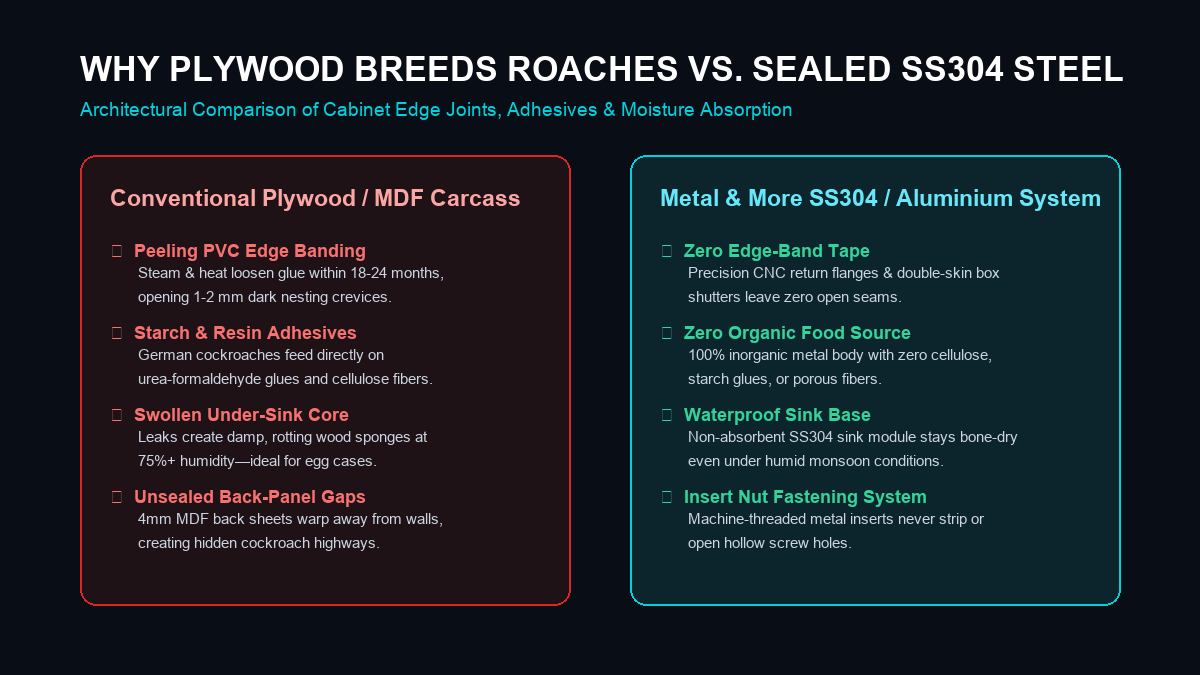
Commercial culinary kitchens, pharmaceutical laboratories, and food-processing plants regulated by the Food Safety and Standards Authority of India (FSSAI) are prohibited from using wood-based cabinetry. They mandate food-grade stainless steel because inorganic metal provides zero nourishment and zero porous harbourage.
| Biological & Structural Factor | Plywood / MDF / HDHMR Cabinets | Metal & More SS304 / Aluminium Cabinets |
|---|---|---|
| Edge Construction | Glued PVC edge-banding tape that lifts under steam and traps grease. | CNC precision-folded return flanges with zero glued edge tape. |
| Organic Food Value | Cellulose wood fibers and urea-formaldehyde resins attract pests and borers. | 100% inorganic metal offering zero nutritional value to insects. |
| Moisture & Leak Response | Swells, delaminates, and retains dampness at cut edges (see why plywood swells). | Completely non-absorbent; water wipes off in seconds without penetration. |
| Pheromone Retention | Porous board cores absorb cockroach aggregation pheromones permanently. | Impervious surface; disinfecting removes scent trails completely. |
| Hardware Fastening | Wood screws strip over time, opening hollow gaps behind hinge plates. | Insert Nut Fastening System with machine-threaded metal fixing points. |
| Deep Cleaning Tolerance | Cannot be washed with water or steam without risking laminate bubbling. | Washable interior; tolerates thorough wet wiping and sanitizing. |
Notice how every biological vulnerability of wood—edge tape delamination, moisture absorption, cellulose nutrition, and pheromone soaking—is absent in a precision-folded metal cabinet. When you remove the porous substrate, cockroaches in modular kitchen cabinets lose their physical habitat.
Upgrade to a 100% Pest-Proof & Termite-Proof Metal Kitchen
Explore custom SS304 stainless steel, aluminium, and GI modular kitchens in warm matte PU, wood-grain, and stone finishes—manufactured in-house at our Charlapally factory.
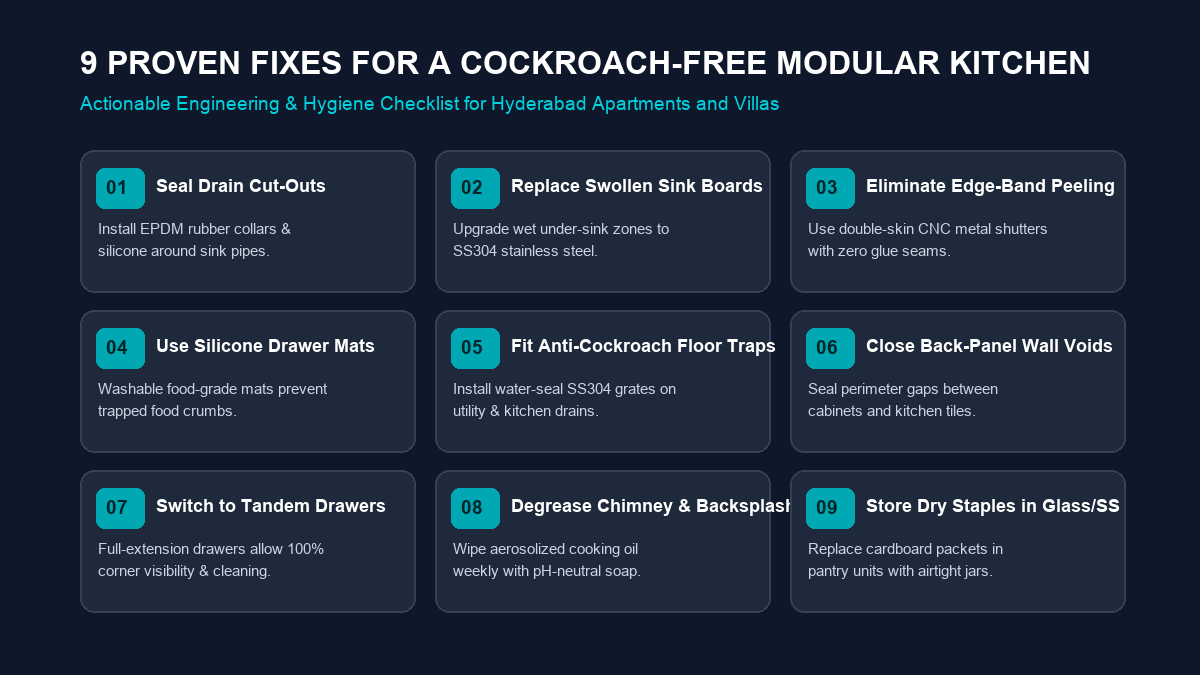
9 proven fixes to stop cockroaches in modular kitchen cabinets
Eliminating cockroaches in modular kitchen cabinets requires combining structural exclusion with targeted baiting and material upgrades. Work through these nine engineering and maintenance fixes in sequence so that pests have neither an entry route nor a nesting cavity.
Fix 1: Seal under-sink drain and RO pipe cutouts with EPDM collars
Inspect the back and floor panels of your sink cabinet where the PVC drain pipe, angle valves, and water purifier tubes pass into the wall. Carpenters frequently cut oversized 4-inch square holes around 1.5-inch pipes, leaving an open doorway from the wall duct into the cabinet.
Fit snug EPDM rubber pipe grommets around every pipe and seal the perimeter against the cabinet panel using anti-fungal neutral-cure silicone sealant. Never leave raw board cutouts exposed around wet plumbing lines.
Fix 2: Replace swollen wooden sink-base boxes with SS304 stainless steel
If your existing kitchen has a damp, flaking wooden cabinet under the sink, no pesticide will stop cockroaches in modular kitchen cabinets until that wet board is removed. You do not always have to demolish the entire kitchen to fix the wet zone.
Replacing the damaged sink module with a dedicated SS304 stainless steel cabinet module in Hyderabad immediately eliminates moisture retention, wood rot, and fungal odour in the highest-risk zone of the kitchen.
Fix 3: Eliminate peeling edge-banding with double-skin CNC metal shutters
In existing wooden kitchens, inspect every door and shelf edge near the hob, oven, and sink. Re-bond any lifting PVC edge tape immediately with waterproof polyurethane adhesive, or seal hairline gaps with clear food-safe silicone so nymphs cannot squeeze inside.
When planning a new kitchen or shutter upgrade, specify CNC-folded double-skin metal shutters filled with high-compression honeycomb or PU cores. Because the metal skin folds seamlessly around the perimeter without glued edge tape, crevices never open up over time.
Fix 4: Line tandem drawers with washable food-grade silicone mats
Fixed wooden shelves and wire pull-out baskets drop tiny spice grains, flour dust, and oil droplets into dark cabinet corners. Replace wire baskets with full-extension solid-bottom tandem drawers so you can see and wipe every square inch of storage.
Equip every drawer with removable, non-slip food-grade silicone mats. Whenever turmeric, oil, or grain spills, you can lift the mat out, wash it in the sink with warm dish soap, and return it bone-dry in two minutes.
Fix 5: Install water-seal SS304 anti-cockroach floor traps
Large American cockroaches enter apartments primarily through dry floor drain traps in the kitchen utility area or washing area. Standard perforated drain grates allow insects to push straight up from building drainage stacks whenever the water trap dries out.
Install heavy-duty SS304 anti-cockroach floor traps featuring a weighted one-way flap or deep liquid seal cup. Flush utility floor drains twice a week with hot water to keep the water lock full and block drain-borne pests completely.
Fix 6: Close back-panel wall voids and countertop silicone joints
Check the junction where your granite or quartz countertop meets the backsplash tiles, as well as the side gaps between tall cabinets and plastered walls. Cracked grout lines allow roaches to travel from behind the countertop straight into upper and lower cabinets.
Rake out crumbling cement grout along the countertop perimeter and apply a continuous bead of sanitary-grade silicone. In metal modular kitchens, flush-fitted carcasses and precision filler panels prevent wall voids from becoming hidden pest corridors.
Fix 7: Use targeted Fipronil or Imidacloprid gel baits instead of aerosol sprays
Spraying pyrethroid aerosols inside cabinets scatters cockroaches in modular kitchen cabinets deeper into wall voids and contaminates cookware surfaces. Professional entomologists recommend pinhead-sized dots of Fipronil (0.05%) or Imidacloprid (2.15%) gel bait placed inside hinge cups and drawer runner channels.
Worker roaches consume the slow-acting bait and return to their harbourage, transferring the active ingredient to nymphs and gravid females inside the nest through cascading secondary transfer. Always apply gel baits only after degreasing the cabinet interior.
Fix 8: Degrease chimney baffles and upper cabinet soffits weekly
Indian tempering releases aerosolized oil vapour that settles as a sticky film on the top edges of overhead cabinets and inside chimney filters. Even a microscopic film of polymerised cooking oil sustains cockroach populations for months.
Wipe cabinet shutters, handles, and overhead tops weekly using warm water and a pH-neutral dishwashing liquid. As explained in our steel kitchen maintenance and cleaning guide, non-porous PU-coated and brushed SS304 surfaces release oil effortlessly without absorbing grease.
Fix 9: Decant dry groceries from cardboard and plastic bags into airtight jars
Cardboard cereal boxes, corrugated delivery cartons, and loosely clipped plastic pulse packets frequently carry cockroach eggs from wholesale warehouses directly into your pantry unit. Cockroaches also chew through thin polyethylene packets and feed on cardboard glue.
Discard outer cardboard packaging before storing groceries inside tall pantry units. Transfer dals, flours, spices, and dry snacks into airtight glass or food-grade stainless steel containers with silicone-gasket lids.
Engineering the under-sink zone: where 70% of infestations start
Ask any pest control technician in Secunderabad, Gachibowli, or Kokapet where they find the highest concentration of cockroaches in modular kitchen cabinets, and the answer is almost always the under-sink base unit. That single 3-foot cabinet combines standing humidity, dark plumbing penetrations, food waste bins, and warm RO purifier adapters.
When a sink cabinet is built from plywood or HDHMR, condensation dripping off the underside of a cold stainless steel sink bowl keeps the cabinet air damp. Within two monsoons, the board edges swell, mould takes hold (see our guide on mould and fungus inside kitchen cabinets), and cockroaches establish their primary nursery beneath the sink floor.
- 0.8 mm AISI 304 Stainless Steel Sink Carcass: Manufactured from certified food-grade stainless steel conforming to Indian Stainless Steel Development Association (ISSDA) hygiene benchmarks, ensuring zero water absorption even if a pipe joint leaks.
- Anti-Condensation Sink Undercoating & Acoustic Pads: Heavy rubber damping pads and anti-condensation coating beneath the sink bowl prevent moisture droplets from forming inside the cabinet.
- Sealed Service Access Panels: Precision CNC service cutouts for drain traps and RO lines allow plumbers to service fittings without leaving ragged holes in the back panel.
- Ventilated Detergent & Bin Pull-Outs: Keeping wet organic garbage in a sealed, removable bin drawer with daily liner disposal prevents food odours from drawing pests inside.
How Metal & More builds pest-proof kitchens in Hyderabad
At Metal & More Interiors, we design and manufacture complete metal modular kitchens, wardrobes, and home storage in-house at our factory in B.N. Reddy, Charlapally, with our design office at Jai Jawahar Nagar, Yapral Ammuguda Road, Secunderabad. Every module is engineered specifically to eliminate the structural weaknesses that cause wooden kitchens to fail in Indian homes.
Instead of cutting wooden boards on site and gluing plastic tape over the edges, our cabinetry is fabricated from SS304 stainless steel, aluminium, and galvanised steel (GI) using CNC sheet-metal folding. The cabinet body and double-skin shutters have no wood core to swell, no cellulose to attract termites (see termites in plywood kitchen cabinets), and no delaminating seams where cockroaches in modular kitchen cabinets can hide.
Hardware attachments use our Insert Nut Fastening System, where machine screws thread into permanent metal inserts set into the cabinet frame rather than biting into soft wood chips. Hinges, tandem channels, and pantry pull-outs stay tight after years of heavy use, and doors can be removed for deep cleaning or service without stripping the fixing point.
Standard kitchen counter depth is planned around 2 feet where applicable, customized to your room layout, appliances, and plumbing points. Our finishes include automotive-grade PU paint, matte powder coating, wood-grain sublimation, stone-finish laminates, and fluted glass—giving you a warm, residential aesthetic that never looks industrial (explore how modern steel kitchens look warm and residential).
Want to inspect our CNC-folded SS304 and aluminium cabinets in person?
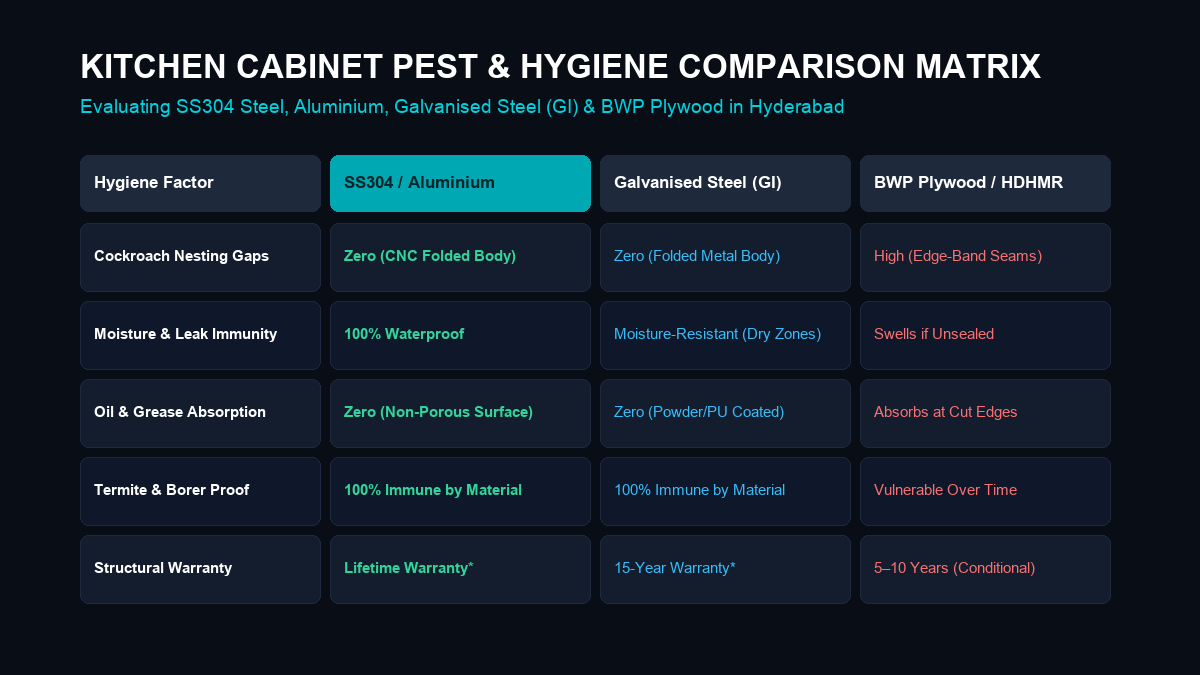
Material comparison: SS304 vs aluminium vs GI vs BWP plywood
Choosing the right cabinet material by kitchen zone allows you to balance lifelong hygiene with project budget. We recommend materials based on moisture exposure, daily load, and cleaning frequency rather than a one-size-fits-all package.
| Material System | Best Kitchen Zones | Cockroach & Pest Resistance | Warranty & Lifespan |
|---|---|---|---|
| SS304 Stainless Steel | Wet sink bases, hob run, dishwasher-adjacent units, and full premium kitchens. | Maximum (100% non-porous, food-grade, waterproof). Zero breeding crevices. | Lifetime warranty* on structure; 30+ years service life. |
| Aluminium Modular System | Complete kitchens, tall pantry units, overhead cabinets, and utility storage. | Maximum (100% rust-proof, lightweight, non-absorbent). Zero organic core. | Lifetime warranty* on structure; 25+ years service life. |
| Galvanised Steel (GI) | Dry storage zones, overhead cabinets, wardrobes, and mixed-metal packages. | High (folded metal body with powder/PU finish). Termite-proof and non-porous. | 15-year warranty* under written project terms. |
| BWP Plywood / HDHMR | Dry living room furniture (not ideal for wet Indian kitchen sink zones). | Low to Moderate. Vulnerable to edge-band lifting, damp swelling, and pests. | 5–10 years typical before edge and sink-zone repairs. |
For homeowners seeking value without compromising wet-zone hygiene, our mixed-metal packages pair an SS304 stainless steel kitchen counter with aluminium or GI overhead and dry storage. You can compare full room-wise budgets in our modular kitchen cost per sq ft in Hyderabad guide and our aluminium modular kitchen guide.
Why Hyderabad high-rise apartments face higher kitchen pest pressure
Homeowners moving into gated communities in Gachibowli, Kondapur, Narsingi, Tellapur, and Sainikpuri are often surprised to discover cockroaches in modular kitchen cabinets on the 12th or 20th floor within months of possession. High-rise elevation does not isolate a kitchen from urban pests because modern apartment towers share vertical plumbing shafts, wet utility ducts, and refuse chutes.
Whenever a neighbouring flat undergoes chemical pest control or interior renovation, displaced colonies migrate vertically through unsealed utility pipe sleeves. If your kitchen cabinets are constructed from porous wood with open back-panel cutouts, migrating insects immediately colonize the warm cavity behind your sink and dishwasher.
Hyderabad’s seasonal weather shifts compound the problem. From June through October, monsoon humidity pushes indoor relative humidity above 70 percent across Secunderabad and West Hyderabad. Wood-based carcasses absorb that atmospheric moisture, softening glue lines and creating the warm, damp microclimate where German cockroach oothecae achieve near-total hatch rates.
By contrast, an inorganic metal kitchen system acts as a passive barrier inside a high-rise apartment. Even if an insect enters through a window or delivery carton, it finds zero damp wood, zero lifted edge tape, and zero hidden food traps inside a CNC-folded SS304 or aluminium cabinet.
Comparing 10-year pest control and cabinet repair costs in Hyderabad
Many families spend ₹4,000 to ₹7,500 per year on quarterly AMC pest control contracts trying to manage cockroaches in modular kitchen cabinets, plus another ₹25,000 to ₹45,000 every five years replacing swollen under-sink plywood and peeling shutters. Over a 10-year period, recurring chemical treatments and carpenter patch-ups easily exceed ₹80,000 without ever curing the underlying material flaw.
Investing in a factory-engineered stainless steel or aluminium kitchen eliminates both recurring carpenter repairs and structural pest harbourage from day one. As shown in our analysis of why a stainless steel kitchen saves money over 10 years, lifecycle durability makes metal the most economical decision for permanent homes.
Designing utility balconies, pantry units, and appliances for zero pests
Complete kitchen hygiene extends beyond the main cooking counter into the utility balcony and tall appliance garage. In Hyderabad apartments, the utility wet zone houses the washing machine, dish-drying racks, and secondary sink—making it the primary entry point for drain insects.
Fabricating utility base and broom cabinets in weather-resistant aluminium or SS304 prevents mop water and monsoon rain splash from rotting the storage boxes. Similarly, housing built-in ovens and microwaves inside ventilated metal tall units prevents appliance heat from delaminating adjacent cabinet walls and attracting warmth-seeking cockroaches in modular kitchen cabinets.
Pre-installation hygiene & pest-proofing checklist
Whether you are renovating an older apartment in Banjara Hills or fitting out a new flat in Kokapet, run through these eight verification checks before the kitchen handover is signed off so you never face cockroaches in modular kitchen cabinets.
- Verify plumbing collars: Confirm every drain outlet, angle valve, and RO pipe cutout inside the sink unit is sealed with a rubber grommet and neutral silicone.
- Check tile grouting behind cabinets: Ensure wall tiles behind base and wall units are fully grouted before carcasses are hung, leaving no open mortar holes in the brickwork.
- Inspect shutter edge construction: Reject single-sheet flimsy doors or poorly glued edge tape; specify double-skin CNC-folded metal shutters.
- Confirm hardware fixing method: Check that hinges and drawer channels thread into machine insert nuts rather than raw board edges.
- Test skirting removability: Ensure bottom plinth skirting either seals cleanly to the floor or unclips easily so mop water under the cabinets can be inspected and dried.
- Seal countertop-to-wall junctions: Check that a continuous bead of anti-fungal silicone seals the back edge of the stone worktop and the sink rim.
Frequently asked questions
Why do cockroaches in modular kitchen cabinets return even after pest control?
Chemical sprays only kill exposed adult cockroaches on open surfaces. In wooden modular kitchens, German cockroaches hide their egg cases (oothecae) inside 1.5 mm crevices under peeling PVC edge-banding, inside swollen under-sink plywood, and behind hollow MDF back panels. When those protected eggs hatch 14 to 21 days later, the infestation starts all over again unless the crevices and dampness are removed.
Are stainless steel and aluminium modular kitchens completely cockroach-proof?
SS304 stainless steel and aluminium cabinets are 100% non-porous, inorganic, and fabricated with CNC-folded edges instead of glued edge tape. Because they never swell with moisture, contain zero cellulose or starch adhesives, and eliminate delaminating board seams, cockroaches in modular kitchen cabinets have no structural crevices to breed inside the cabinet body.
Can I replace only my damaged under-sink wooden cabinet with stainless steel?
Yes. Because the under-sink zone accounts for the majority of moisture damage and pest breeding, many Hyderabad homeowners start by replacing their rotting wooden sink base with a custom-measured SS304 stainless steel module, or review our modular kitchen layout & metal cabinet planning guide for complete replacement options across Secunderabad and Tirumalgiri modular kitchen projects.
Is it safe to wash stainless steel modular kitchen cabinets with water?
Yes. Unlike plywood, MDF, or particle board that swells when exposed to water, SS304 stainless steel and aluminium cabinets are completely waterproof and non-absorbent. You can wipe them down with warm water and mild pH-neutral dish soap, and wash removable silicone drawer liners directly in the sink. Avoid harsh hydrochloric tile acids or bleach on metal surfaces.
What warranty does Metal & More Interiors provide on metal kitchens in Hyderabad?
Metal & More Interiors provides a lifetime warranty on SS304 stainless steel and aluminium cabinetry, and a 15-year warranty on galvanised steel (GI) cabinetry, subject to written project terms. All modules are manufactured in-house at our Charlapally factory with a typical handover window of 45 to 60 days.
Ready to Build a Hygienic, Pest-Free Kitchen That Lasts a Lifetime?
Share your floor plan or kitchen measurements with our Hyderabad engineering team. Get a transparent, itemised quotation for SS304, aluminium, or mixed-metal interiors.
Engineering notes and warranty specifications apply to approved material schedules manufactured by Metal & More Interiors (Office: Jai Jawahar Nagar, Yapral Ammuguda Road, Secunderabad; Factory: B.N. Reddy, Charlapally, Hyderabad).