
Looking for a hygienic metal kitchen in Hyderabad? A non-absorbent cabinet body, accessible wet zones and planned ventilation help prevent recurring mould. Request an approximate estimate for your kitchen.
Mould and fungus inside kitchen cabinets point to trapped moisture rather than a dirty surface. Cleaning removes what is visible, but growth returns until the leak, condensation or damp airflow behind the cabinet is corrected. Non-porous metal surfaces are easier to wipe, yet the surrounding wall, plumbing and stored items also have to stay dry.
Most homeowners meet this problem at the worst moment: a musty smell when a cupboard is opened, a dark patch along the back panel, or a soft film on the base under the sink after a wet spell. The instinct is to scrub the surface and move on, but the growth is usually a symptom of water that has been arriving slowly, out of sight, for weeks.
This guide explains mould and fungus inside kitchen cabinets for Hyderabad homes, where a long monsoon and humid air keep many rooms damp for months. It works through one order of operations: find the moisture, decide what can be cleaned and what must be replaced, then design the cabinet and the room so damp air cannot linger. Metal & More Interiors designs and manufactures metal interiors in-house from its factory at B.N. Reddy, Charlapally, with its office at Jai Jawahar Nagar, Yapral Ammuguda Road, Secunderabad.
Mould and Fungus Inside Kitchen Cabinets: Quick Answer
Mould and fungus need three things at once: moisture, a suitable temperature, and a food source such as dust, grease, spilled food or a damp organic surface. A cabinet supplies the warmth and the darkness; water usually arrives from a leak, condensation or humid air that cannot escape. Remove any one of the three and growth stops.
That is why cleaning alone rarely lasts. A wipe removes the visible growth, but if the pipe still drips, the wall behind the unit is still damp, or wet utensils are still stored against a closed back panel, the surface is recolonised. Fix the water first, dry and clean the cabinet properly, and then change whatever allowed the moisture to collect.
Material matters, but not in the way the labels suggest. A non-porous metal surface cannot soak up water or keep damp residue below the surface, so it is easier to wipe and harder to contaminate. A board-based cabinet can hold moisture inside its core and along its edges, which is why damp and musty smells often persist in one even after the visible face has been cleaned.
Understanding mould and fungus in cabinets
Mould and fungus are naturally present almost everywhere as tiny spores. They do not need a “dirty” kitchen; they need a surface that stays damp for long enough. In a cabinet that happens at low points and cold spots: the base under a sink, the back panel against a damp wall, the underside of a shelf where a leak drips, and the corners where crumbs and grease collect unseen.
The usual combination is a slow water source, poor airflow and a surface that holds residue. A cabinet is warm, enclosed and dark for most of the day, so once moisture gets in, the inside stays humid even after the room has dried out. Closing the shutters simply protects the conditions that let growth continue.
The colour of the growth is a poor guide. Staining can be black, green, grey or pale, and the appearance says little about the cause. What matters is the pattern: growth that follows a seam, a cut-out or a water mark points to a moisture path, while growth spread across a whole base suggests a general damp problem. Treat the source, not the shade.
Hyderabad’s climate makes this a recurring topic rather than a one-off. Humidity is high for much of the year, the monsoon adds weeks of damp air, and many kitchens sit against external walls or beside a wet utility area. In that setting a cabinet does not need an obvious flood to grow damp; a slow trickle of humid air and a surface that never fully dries are enough over time.
For most people a damp, musty cabinet is mainly a nuisance and a signal that something is wrong. Some people are more sensitive to damp indoor environments, and if growth keeps returning, covers a large area, or appears alongside ongoing symptoms you are concerned about, treat it as a reason to correct the moisture properly and, where a large area is involved, to seek appropriate professional advice rather than trying to manage it with cleaning alone.
Where the moisture comes from
Very little cabinet mould starts with a flood. It starts with water that arrives slowly and leaves slowly, and it usually has one of a handful of sources. Finding which one applies is the single most useful step, because the fix for condensation is different from the fix for a leaking trap.
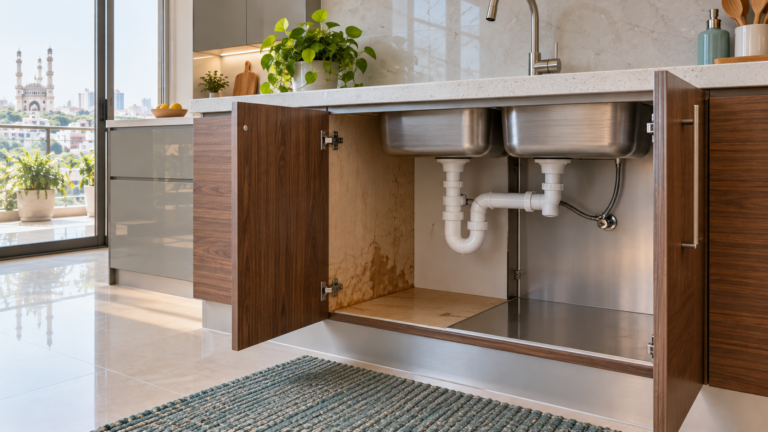
The first is plumbing. A weeping joint under the sink, a loose trap, a dripping waste pipe, a purifier connector or a wet patch from an appliance hose can all keep a cabinet base damp. These are often the least visible, because the water collects at the back or beneath the unit and only the smell reaches the room.
The second is condensation. Cold pipes inside a warm cabinet collect beads of water, and a dishwasher, washing machine or water purifier releases warm damp air that settles on cooler surfaces. In a closed space, that water never really dries. Muggy monsoon air works the same way, slowly raising the humidity of every enclosed cupboard.
The third is the building itself. Seepage through a wall, a damp slab, a leaking window or a wet patch behind a cupboard can keep the back panel and the wall behind it moist for months. This is common at the base of a wall, near a floor drain and on the outer walls of ground-floor rooms.
The fourth is everyday use. Wet utensils put away still dripping, damp cloths stored in a cupboard, spills left in a corner, food residue on a shelf, and a sink base that never fully dries all add moisture and food for growth. None of these is dramatic on its own, but together they keep the inside of a cabinet permanently damp.
Kitchens add their own pressures. Cooking releases steam, washing up leaves the sink area wet, and a bin or a dishwasher sits warm and humid in an enclosed unit. Stack this against a wall that is already cool or damp, and the inside of the cabinet becomes the wettest place in the room even when the kitchen looks clean and dry.
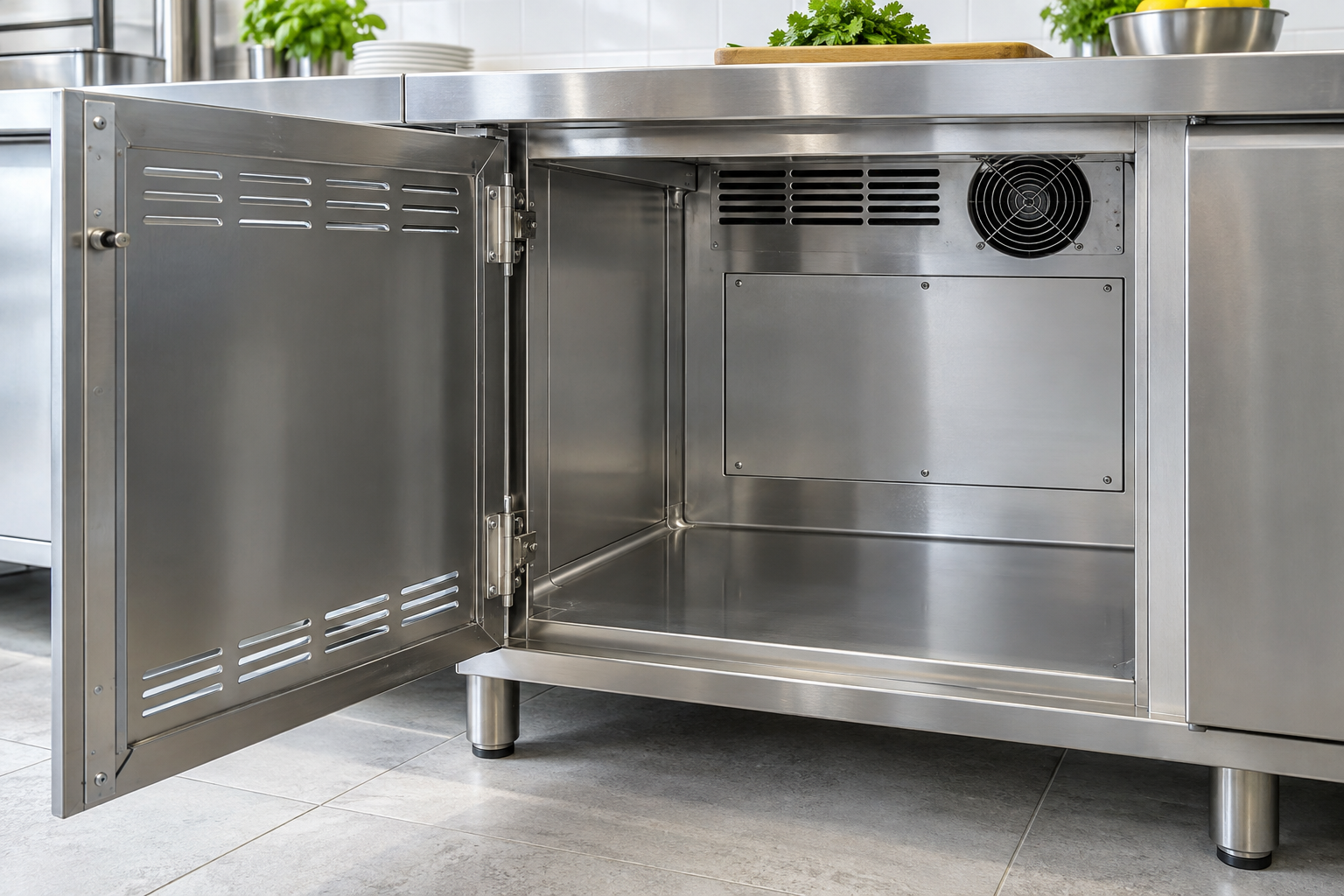
The common thread is drainage and airflow. In every case, water or humid air is arriving faster than it can evaporate. The cabinet is not the cause; it is the place where the result becomes visible.
How to assess a damp or musty cabinet
Work from evidence and inspect the hidden parts, not only the front. Photograph the affected area, note when the smell or staining first appeared, and check the neighbouring units, because moisture travels along a base or a wall before it becomes obvious. A cabinet can look clean on the outside while the back edge, base or the underside of a shelf is already damp.
| Check | What to examine | Why it matters |
|---|---|---|
| Smell | Open the cabinet and note any musty, earthy odour. | A smell often appears before visible growth and points to hidden dampness. |
| Visible growth | Look along seams, the back panel, the base and any water marks. | The pattern shows where water is entering rather than where it has spread. |
| Moisture source | Check pipes, the trap, appliance hoses and the wall behind the unit. | Cleaning fails if the water has not been stopped. |
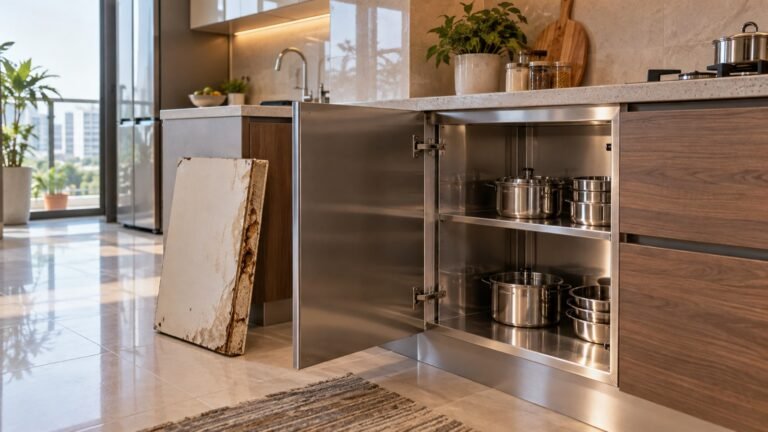
| Surface condition | Press the base and edges; look for soft or swollen material. | Separates a cleanable surface from one that has absorbed water. |
| Airflow | See whether the cabinet has any ventilation and whether the shutters stay closed. | Trapped air keeps the inside humid long after the room dries. |
| Stored items | Inspect containers, cloths, packaging and food stored against the walls. | Damp or contaminated porous items restart the problem. |
The most useful questions are specific. Is the growth on the surface only, or has it reached into the material? Does it return in the same corner each time, which would suggest a steady water path, or appear widely after a wet season, which suggests humidity? Can the plumbing be reached without dismantling the cabinet? The answers decide whether the cabinet can be cleaned and kept, or whether the affected part should be replaced.
Removing mould safely
Cleaning is the second step, not the first. If the water source is still active, anything removed from the surface will come back, so stop the leak or the damp airflow before spending effort on the surface itself. Once the source is fixed, open the cabinet, empty it, and let it dry with the doors open and the room ventilated.
Follow the label on any cleaning product and never mix different household chemicals, because some combinations release harmful fumes. Wear gloves, protect your eyes, and keep the area ventilated while you work. Work on a small, hidden area first to check that the cleaner does not mark the finish, then clean the surface gently rather than scrubbing hard, which can spread spores and damage coatings.
Porous items are usually the hardest to save. Food, cardboard packaging, cloths, wooden spoons and any material that has absorbed moisture and contamination are better discarded than reused, because growth can return from inside them. Seal and remove what you discard, and wash the containers that stay.
Work from the clean area towards the affected area, and change cloths rather than carrying contamination from one cabinet to the next. A dedicated cloth that is washed and dried afterwards prevents the very pattern that makes growth seem to spread from unit to unit. When a surface is genuinely clean and dry, it should smell of nothing at all.
Metal and other non-porous surfaces are the easiest to bring back to a clean state, because the contamination sits on the surface rather than inside the material. Wipe the seams, corners and cut-outs carefully, then make sure the cabinet is fully dry before anything is put back. In a board-based cabinet, a damp, soft or swollen panel that has absorbed water may not be savable at all, and replacing that panel is more reliable than cleaning it again and again.
Do not put food and utensils back into an affected cabinet until the source is corrected and the unit is clean and dry. If the growth is extensive, keeps returning after proper cleaning, or follows a water-damaged panel, treat it as a sign that the cabinet or the room needs a closer look rather than another wipe.
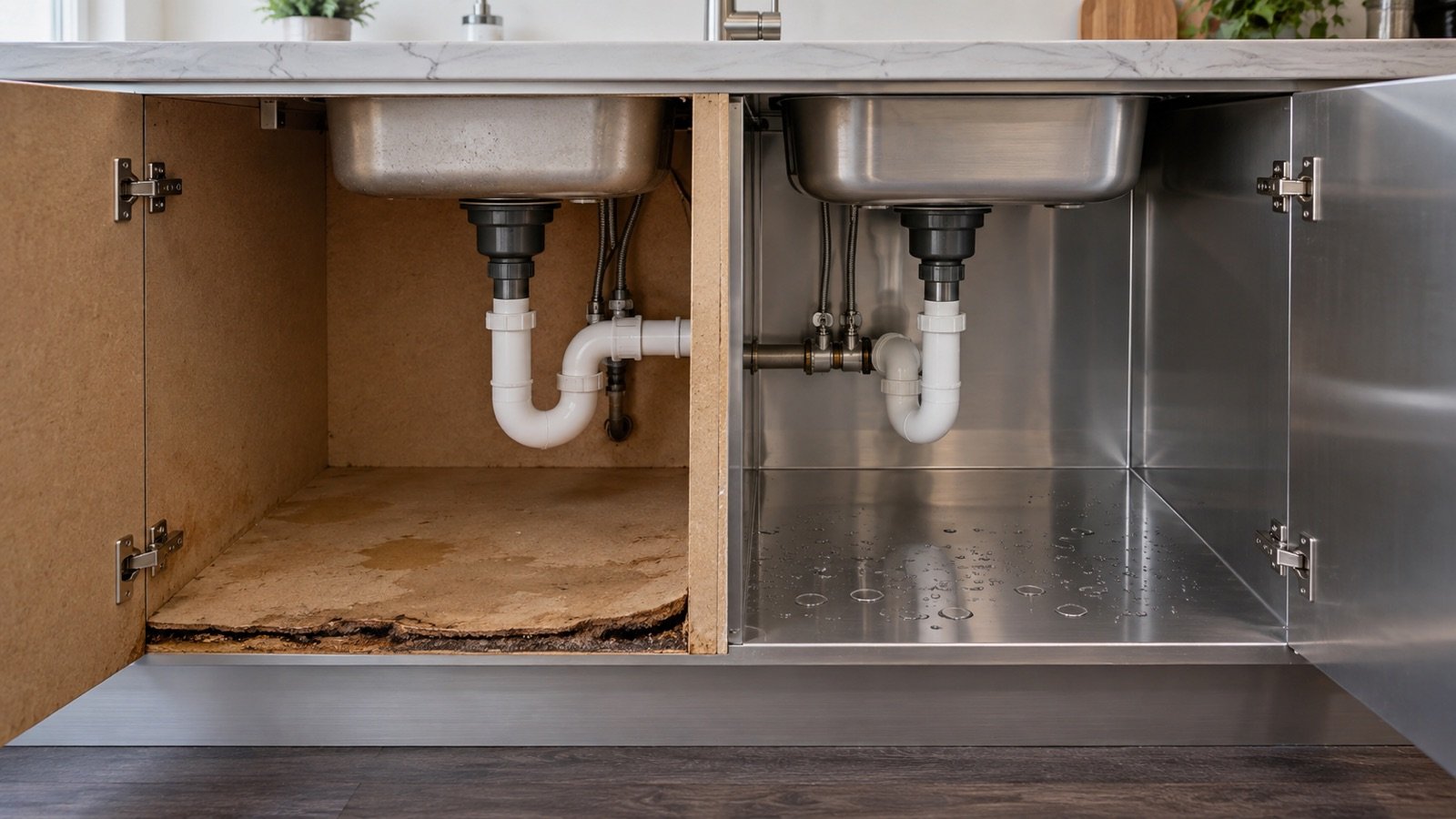
For a cabinet that is repeatedly damp rather than obviously leaking, the wider room matters too. The guides to kitchen cabinet water damage and monsoon damage to modular kitchens set out how water and humid air reach cabinetry over a season, and why correcting the source matters more than the cleaning method.
Preventing it from returning
Prevention is mostly about keeping moisture moving out of the cabinet instead of collecting inside it. A dry cabinet stays clean; a cabinet that stays damp will keep producing growth no matter how often it is wiped. Small design and habit changes do most of the work.
Deal with water first. Repair drips, tighten or replace a leaking trap, insulate cold pipes that sweat, and correct wall seepage rather than hiding it behind a panel. Keep the sink base and the area around appliance hoses dry and visible so a slow leak is noticed while it is still small.
Let air through. Cabinets that are sealed tight keep humid air in, especially under a sink and in a utility corner. Practical measures such as keeping doors open for a while after use, leaving a small ventilation gap, using a wipeable base and avoiding storing damp items against the walls all reduce the humidity that growth needs.
Habits matter as much as products. Emptying the sink base of damp cloths, not stacking still-wet items against a back panel, and opening cabinets for a short while after cooking all cost nothing and make a real difference to how dry the inside stays. Where a cabinet is closed all day, the small amount of moisture released by stored items has nowhere to go.
Dry what goes back in. Utensils, cloths and containers should be dry before they are put away, and food spills should be wiped up rather than left in a corner. In humid months, an occasional wipe of the inside with the doors open helps more than any single deep clean.
Where damp air is a recurring feature of a room, a dehumidifier or steady ventilation can lower the humidity enough to make a difference. For a utility and laundry storage area, where a washing machine or dryer adds moisture, that step matters as much as the cabinet material.
How Metal & More builds differently
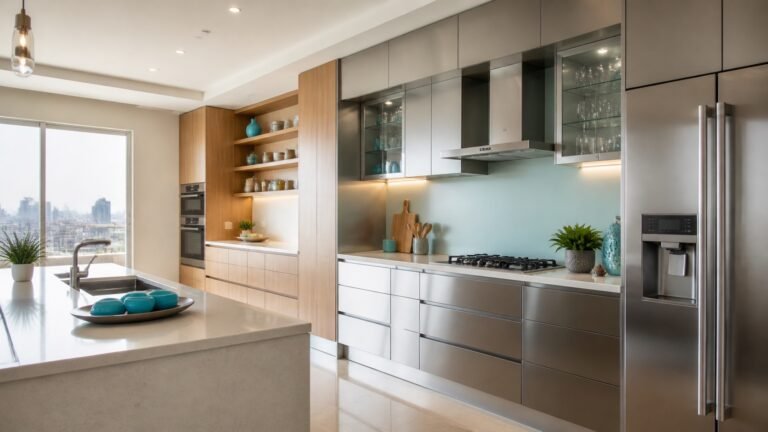
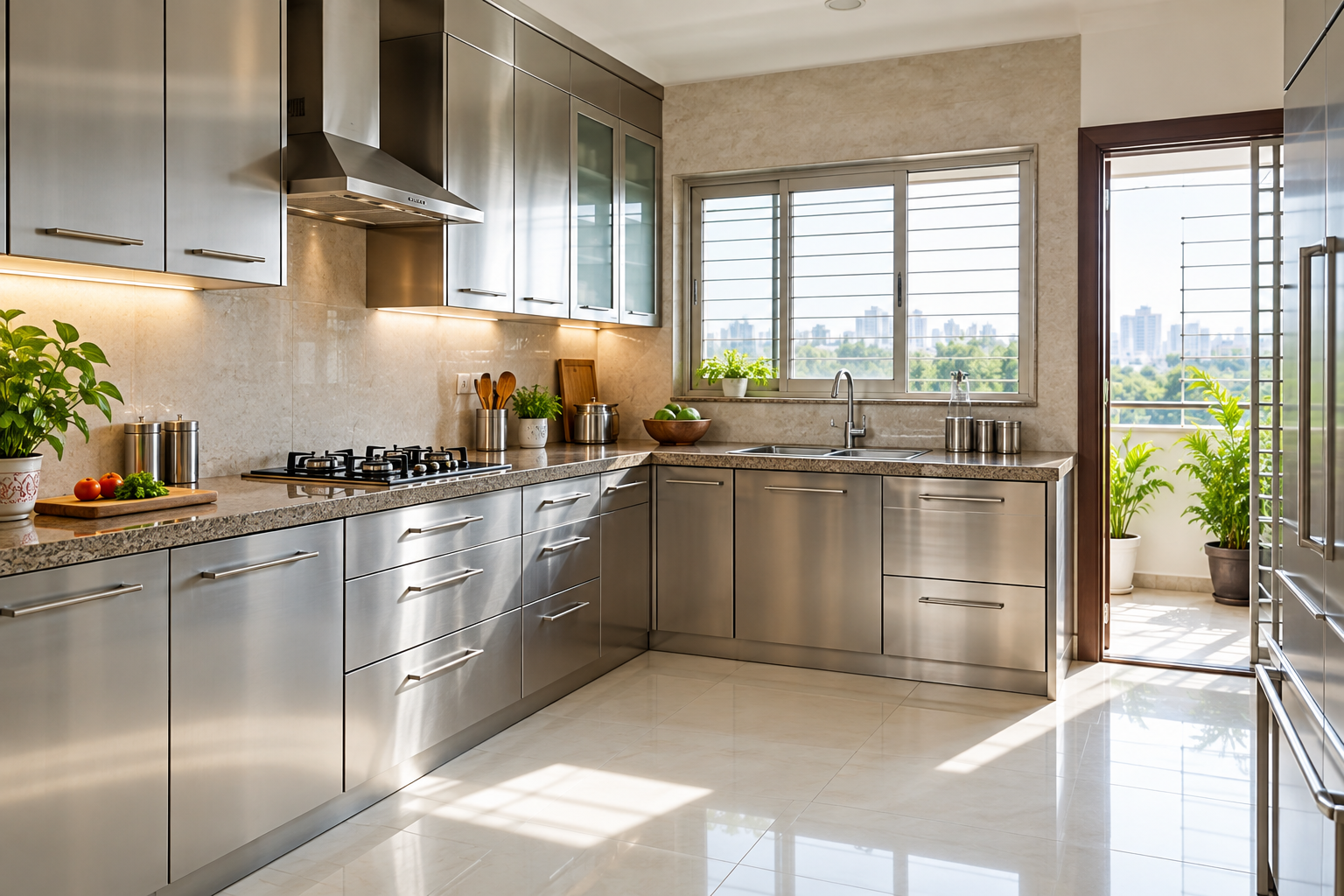
Metal & More Interiors designs and manufactures metal interiors in Hyderabad, with SS304 stainless steel, aluminium and GI cabinetry fabricated in-house. The practical advantage for a damp-prone room is the surface itself: a sound metal surface is non-porous, so it does not absorb water or hold residue below the surface the way a board can.
The cabinet body and shutters are metal, so there is no wood fibre to soak up moisture and no porous edge for contamination to settle into. A wipe, a rinse and a dry cloth restore a clean surface far more easily than reworking a swollen panel, even though hygiene still depends on the water source being controlled and the room being ventilated.
Modules use an Insert Nut Fastening System: a threaded insert forms a controlled fixing point in the fabricated metal, so a shelf or fitting can be removed and refitted during cleaning or service without damaging the panel. Service openings are planned before production, which keeps plumbing reachable and makes it easier to spot a leak early.
Kitchen and wardrobe depth is planned around 2 feet where applicable, then adjusted for the wall, appliances, services and circulation. Warranty follows the approved material schedule: lifetime on stainless steel and aluminium, and 15 years on GI, subject to the written project terms. Metal is termite-proof, non-absorbent and accurately described as fire-resistant, and Hettich hardware can be specified where it is selected and recorded.
Choosing SS304, aluminium or GI
SS304 stainless steel
SS304 is the usual choice for a sink base and other damp zones, because its non-porous, corrosion-resistant surface is hygienic and easy to wipe. Confirm the grade and finish, and clean it with suitable products rather than harsh chloride-rich cleaners or steel wool that can mark the surface.
Aluminium
Aluminium is light, corrosion resistant and useful across kitchens, wardrobes and storage. It suits positions where weight and finish balance matters, provided the profile, reinforcement and hardware fixing are designed well. It can carry warm, residential finishes rather than looking industrial.
GI
Galvanised steel adds a zinc protective layer and is normally paired with a painted or powder-coated finish. Coating continuity at fabricated edges and clear care instructions matter. Metal & More Interiors provides a 15-year warranty on GI under the written project terms.
For a room that is regularly damp, the useful comparison is not which material is “best”, but which body can be kept clean and dry with the least effort. Where a sink base or a utility corner keeps getting wet, compare a stainless steel modular kitchen against the current arrangement before replacing like with like. The same logic extends beyond the kitchen, to bathrooms, utility areas and full-home metal interiors, wherever moisture is a routine part of the day.
Hygiene planning checklist
Use the same short list whether you are cleaning an affected cabinet or specifying a new one for a damp-prone room.
- Find and fix the moisture source before cleaning the surface.
- Empty the cabinet and dry it with the doors open and the room ventilated.
- Follow product labels; never mix household cleaning chemicals.
- Discard porous items that have absorbed moisture and cannot be cleaned.
- Wipe into seams, corners and cut-outs, not just the visible faces.
- Keep plumbing and appliance connections reachable and visible.
- Leave a way for air to move through wet-zone cabinets.
- Choose a non-porous, wipeable surface where damp is likely.
- Put items back only when the cabinet is fully clean and dry.
| Situation | Reasonable first step | Why |
|---|---|---|
| Occasional musty smell, no visible growth | Improve airflow and dry the cabinet. | Damp air often clears without surface treatment once it can escape. |
| Growth in one corner or along a seam | Trace the water path from that point. | A repeat pattern usually means a steady, localised source. |
| Growth across a whole base after the monsoon | Reduce room humidity and check the wall. | Widespread growth points to general dampness rather than one leak. |
| Soft or swollen panel that stays damp | Plan to replace the affected part. | A panel that has absorbed water rarely returns to a sound, clean state. |
A clear plan is easier to act on than a general warning about damp. Deciding the source, the surface and the airflow together is what stops the same corner from growing back every season.
Frequently asked questions
Why does mould return after cleaning?
The moisture source is usually still present, or the material was not fully dried. A slow drip, condensation on a cold pipe or wall seepage can keep a cabinet damp even when the visible surface looks clean, so growth restarts where the water collects.
Is mould on metal easier to clean?
A sound, non-porous metal surface does not absorb moisture the way a board does, so contamination stays on the surface and wipes away more completely. Seams, sealants, cut-outs and any damaged coating still need attention, and the water source must still be fixed.
Should food be kept in an affected cabinet?
No. Remove food and utensils until the source is corrected and the cabinet is safely cleaned and dry. Discard porous packaging and any item that has absorbed moisture, because growth can return from inside it.
Can cabinet design improve hygiene?
Yes. Smooth, wipeable surfaces, accessible corners, reachable plumbing and airflow in wet zones make a cabinet easier to inspect and clean. Design reduces how much moisture can collect, though the room’s water and humidity still have to be managed.
Does a metal cabinet stop the musty smell?
A non-porous metal body does not hold damp residue the way a board can, so a musty smell is less likely to linger in the cabinet itself. If the smell continues, check the wall, the drain and stored items, which can hold moisture and odour even after the cabinet is clean.
How soon should a damp cabinet be dealt with?
Sooner is better. Dampness left in a porous material spreads and softens it, and repeated wetting makes the surface harder to clean. Even for a non-porous cabinet, a recurring water source should be corrected before it damages the wall, hardware or stored contents.
Final decision
Treat mould and fungus inside kitchen cabinets as a moisture problem to be solved, not a surface to be scrubbed. Find where the water or humid air is coming from, clean and dry the cabinet properly, and change whatever allowed the dampness to collect. A cabinet that stays dry stays clean.
Material supports that effort. A non-porous metal body cannot absorb water or hold residue below the surface, which is why it is easier to keep hygienic in a damp zone, though the room still needs the leak fixed and the air moving. Metal & More Interiors can assess the wet zones, plumbing and airflow, then recommend SS304, aluminium, GI or a documented mixed-metal configuration. The office is at Jai Jawahar Nagar, Yapral Ammuguda Road, Secunderabad, and manufacturing is at B.N. Reddy, Charlapally.